
↑
Skip to Content

Comprehensive software for your business. From enterprise management to customer engagement, eCommerce, and content management, the platform brings every workflow together in a single environment.


Comprehensive software for your business. From enterprise management to customer engagement, eCommerce, and content management, the platform brings every workflow together in a single environment.

Answers to key questions

Find answers to frequently asked questions in this section.

This product is a leading solution in the enterprise resource planning (ERP) software market.
Startups, small and midsize businesses, and large international organizations trust this powerful platform. It has more than 12 million active users and an extensive network of thousands of qualified specialists and technical experts.

Two main editions are available: Community and Enterprise. Both on-premises and cloud deployment options are offered.

The system suits businesses seeking clear solutions that are quick to implement. It meets high standards and is ready to use without complex preliminary setup. Its exceptional flexibility also supports unique requirements. We deliver adaptable software and effective solutions promptly to meet your needs.

Modular architecture: use the full system or implement only the components you need today.
 
More than ERP: alongside core resource management tools, the system supports a wide range of related business functions.

Highly flexible: an adaptable platform that can be extended and tailored to unique requirements.
 
An established community: a large, active community develops extensions that build on the product's core functionality.

Answers to key questions

Find answers to frequently asked questions in this section.


This product is a leading solution in the enterprise resource planning (ERP) software market.
Startups, small and midsize businesses, and large international organizations trust this powerful platform. It has more than 12 million active users and an extensive network of thousands of qualified specialists and technical experts.

Two main editions are available: Community and Enterprise. Both on-premises and cloud deployment options are offered.

The system suits businesses seeking clear solutions that are quick to implement. It meets high standards and is ready to use without complex preliminary setup. Its exceptional flexibility also supports unique requirements. We deliver adaptable software and effective solutions promptly to meet your needs.

Modular architecture: use the full system or implement only the components you need today.
 
More than ERP: alongside core resource management tools, the system supports a wide range of related business functions.

Highly flexible: an adaptable platform that can be extended and tailored to unique requirements.
 
An established community: a large, active community develops extensions that build on the product's core functionality.


Odoo for companies of different sizes

Odoo brings core business processes into one system and suits organizations with different structures and transaction volumes. Select the apps you need today and expand as your business grows.

Applications in the Odoo ecosystem

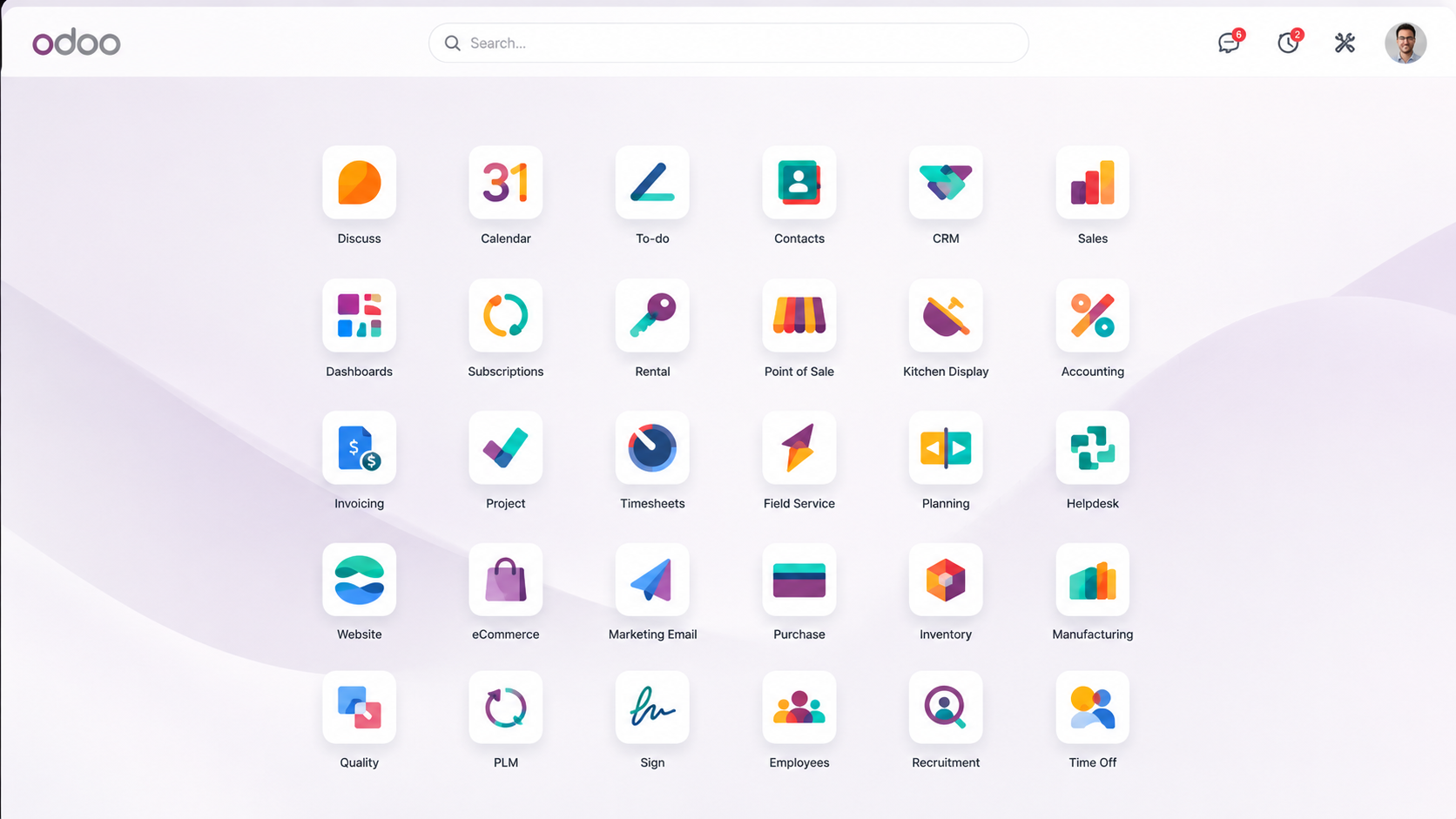
Odoo offers apps for CRM, sales, websites and online stores, marketing, purchasing, inventory, manufacturing, projects, documents, HR, and finance. Shared data connects work across departments.

Odoo for companies of different sizes

Odoo brings core business processes into one system and suits organizations with different structures and transaction volumes. Select the apps you need today and expand as your business grows.

 Applications in the Odoo ecosystem

Odoo offers apps for CRM, sales, websites and online stores, marketing, purchasing, inventory, manufacturing, projects, documents, HR, and finance. Shared data connects work across departments.

CRM

  • Create leads from incoming emails and website forms.
  • Automatic contact geolocation 
  • Streamlined pipeline management.
  • Advanced analytics. 
  • Integration with all sales channels and marketing tools.

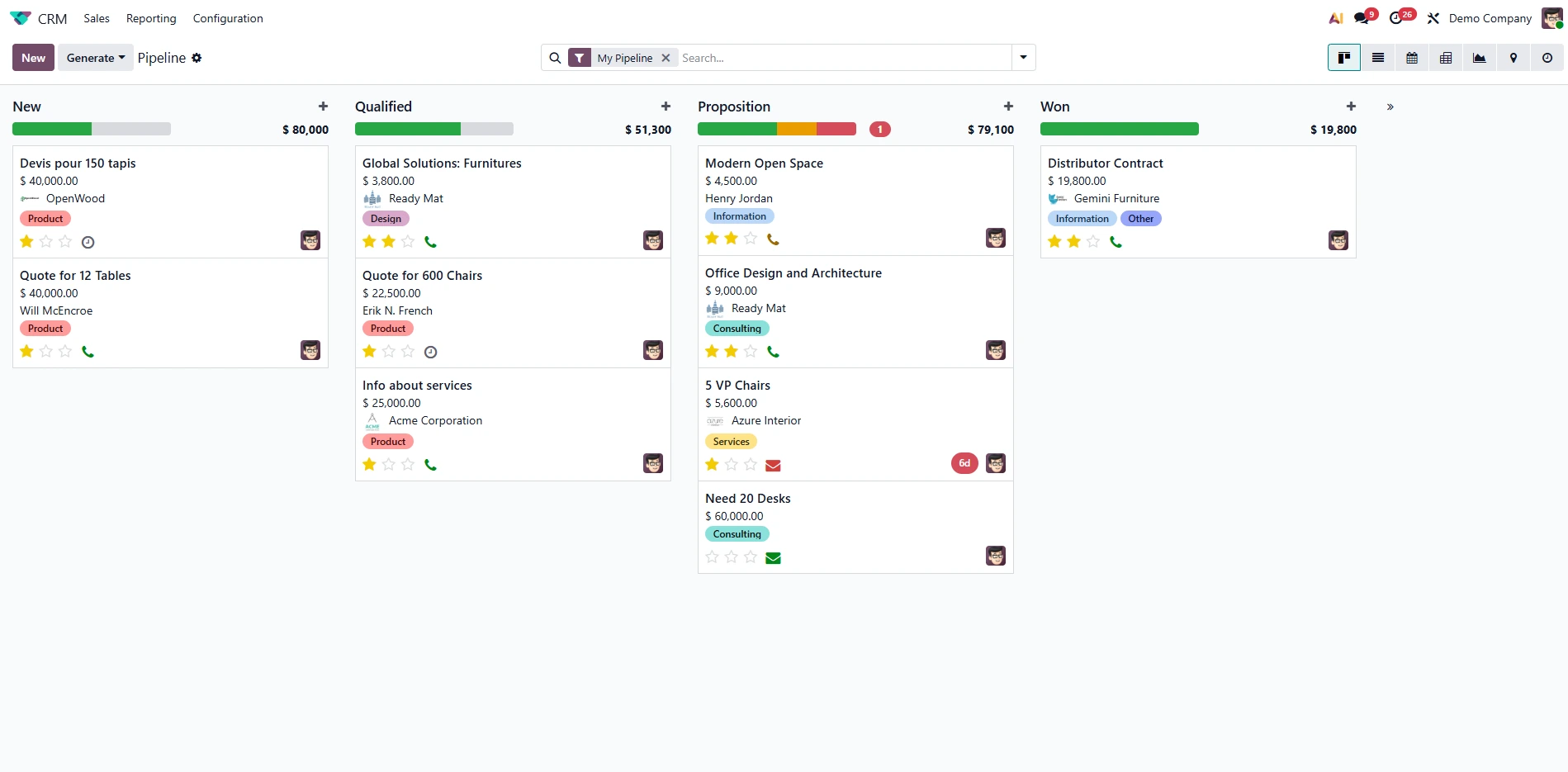
​The CRM module and its dashboard provide full control over sales. Automatically capture inquiries from emails or calls and send quotations quickly, even from a mobile device. Create, import, update, and segment contacts using different criteria. The system identifies the customer's country and city automatically and suggests duplicates to merge when converting a lead into an opportunity. Built-in marketing tools help attract online audiences and improve sales performance. Plan tasks, calls, and meetings, customize the pipeline, and use drag-and-drop views to see every opportunity stage and move deals forward faster.

​Once leads become customers, additional capabilities come into play: a shared address book, individual preferences such as language, logistics, and billing details, and a complete interaction history for every account, from first contact to orders, invoices, and outstanding balances.
​
​Communication tools include email templates, mail gateways, notifications, and integrated telephony. Analytics track inquiry performance and visualize KPIs. The module connects with inventory and sales, offers a powerful API, and supports popular cloud document editors, online stores, points of sale, and marketing tools.

Sales
  • Manage customer orders and sales terms.
  • Faster quotation preparation. 
  • Organized business communication. 
  • Clear analytics and reporting. 
  • Connect every sales channel.


​Improve sales efficiency with dedicated tools. A modern interface and close CRM integration simplify pipeline management. Build professional quotations instantly using templates, products, and price lists. Increase order value with upselling tools and integrated electronic signatures.

​Sales tools make orders and contractual obligations easy to manage. Turn a quotation into an order in one click and generate invoices from the same place. The self-service portal shows purchase and delivery status. Track the full contract lifecycle, from invoicing to renewals and upselling.
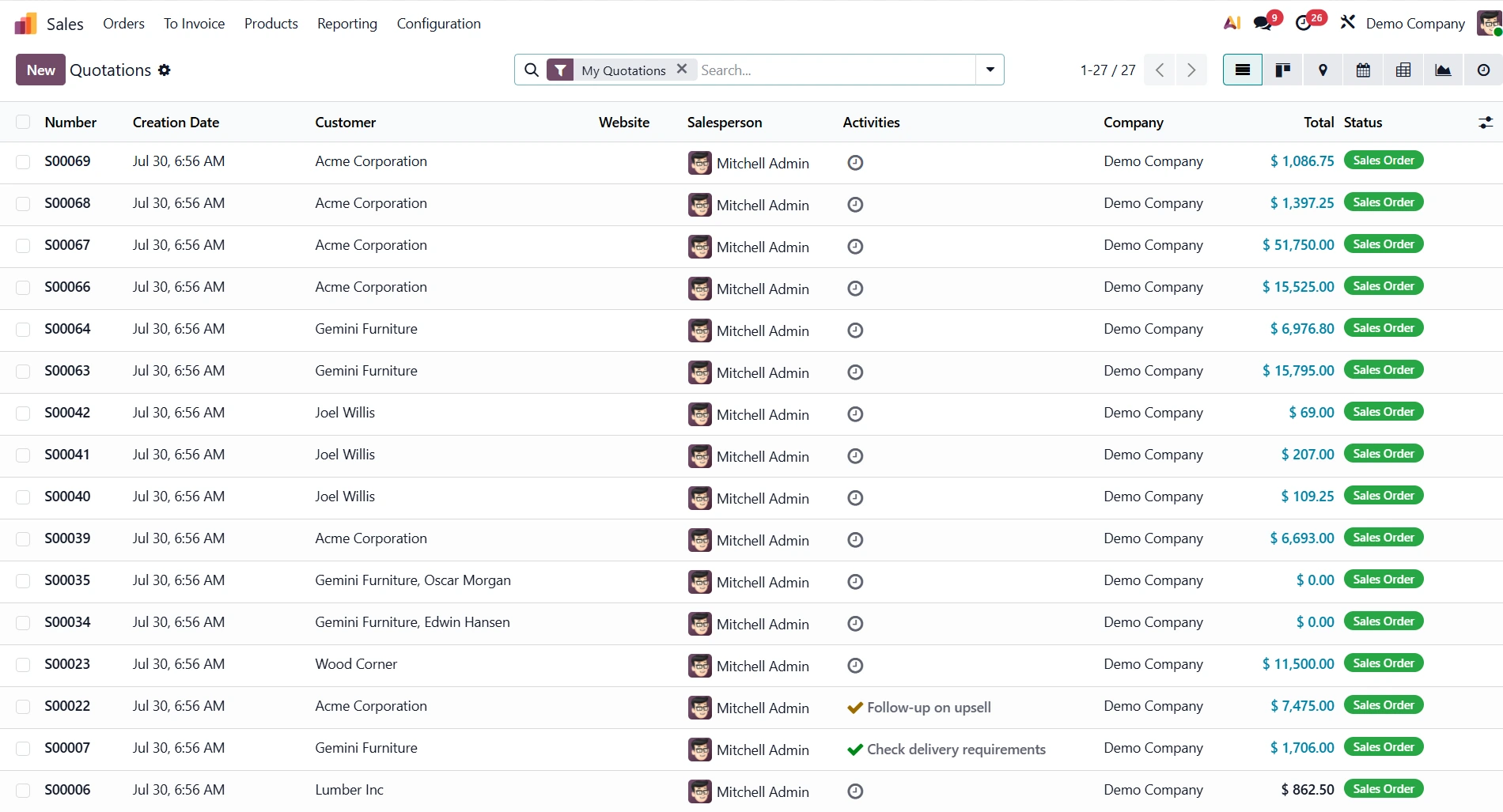

​Planning tools, email templates, and multi-company support keep communications structured. Manage product records, variants, units, flexible price lists, discounts, and shipping rates in the same area. Clear analytics show revenue, upcoming activities, and performance. Track sales by region, salesperson, or department, and monitor price changes. The solution connects accounting, inventory, CRM, and eCommerce, bringing online orders, direct sales, and retail points of sale together.

Accounting
  • Intelligent data entry. 
  • Intelligent accounting entry suggestions.
  •  Multiple languages and currencies. 
  • Stronger financial control. 
  • External software connectivity. 
  • Multiple payment gateways


​Accelerate accounting with a modern interface, automated data entry, document collaboration, invoice payment matching, and bank statement synchronization. Create customer invoices in a few clicks or generate them from orders, hours worked, or delivery documents. Uploaded scans and photos are recognized automatically to create accounting entries.
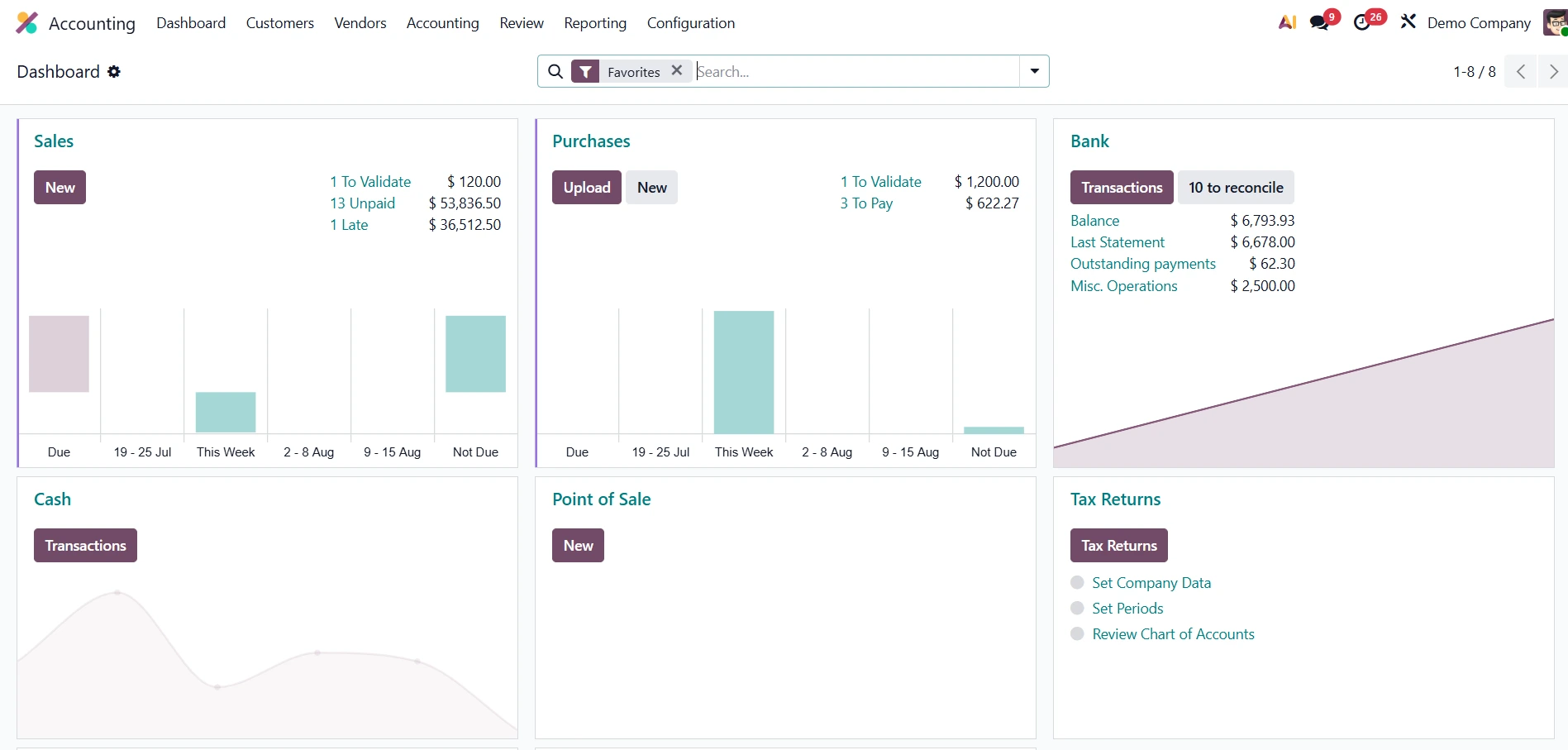
​Control receivables and send automatic debtor reminders. Intelligent suggestions simplify payment allocation. OCR and batch bank transfers speed up vendor bill processing. Financial transactions are reflected immediately in the chart of accounts, with multicurrency accounting, automatic exchange rate updates, and tax calculations.

​A wide range of financial reports includes pivot tables, KPIs, dashboards, and real-time annual balance sheets. Full management accounting supports cost centers, multidimensional analytics, and budgeting. 

​Export data freely and connect external systems through a full-featured API. Send information to popular spreadsheet tools. Accept card and international wallet payments, including invoice payments by QR code. Tax localizations support multiple jurisdictions.

Inventory
  • Inventory management. 
  • Inventory management with advanced process routing.
  • Intelligent planning and matching 
  • Inventory valuation methods and cost calculation.
  • Detailed reporting 
  • Connect multiple logistics services.

​Manage warehouses from any device through a clear interface. Handle receipts, deliveries, stock counts, warehouse zones and bins, packing lists, defects, and internal transfers. Connected modules such as manufacturing extend the capabilities. Support complex logistics, including dropshipping, cross-docking, custom routes, and putaway and picking strategies.

​The module accelerates operations. Barcode scanners speed up warehouse tasks, a customer portal tracks shipments, and smart planning automates replenishment from forecasts. Manage services, consumables, physical and digital goods, with expiration dates and lot tracking. Stock valuation methods include FIFO, average cost, and standard cost, supported by comprehensive movement reports.
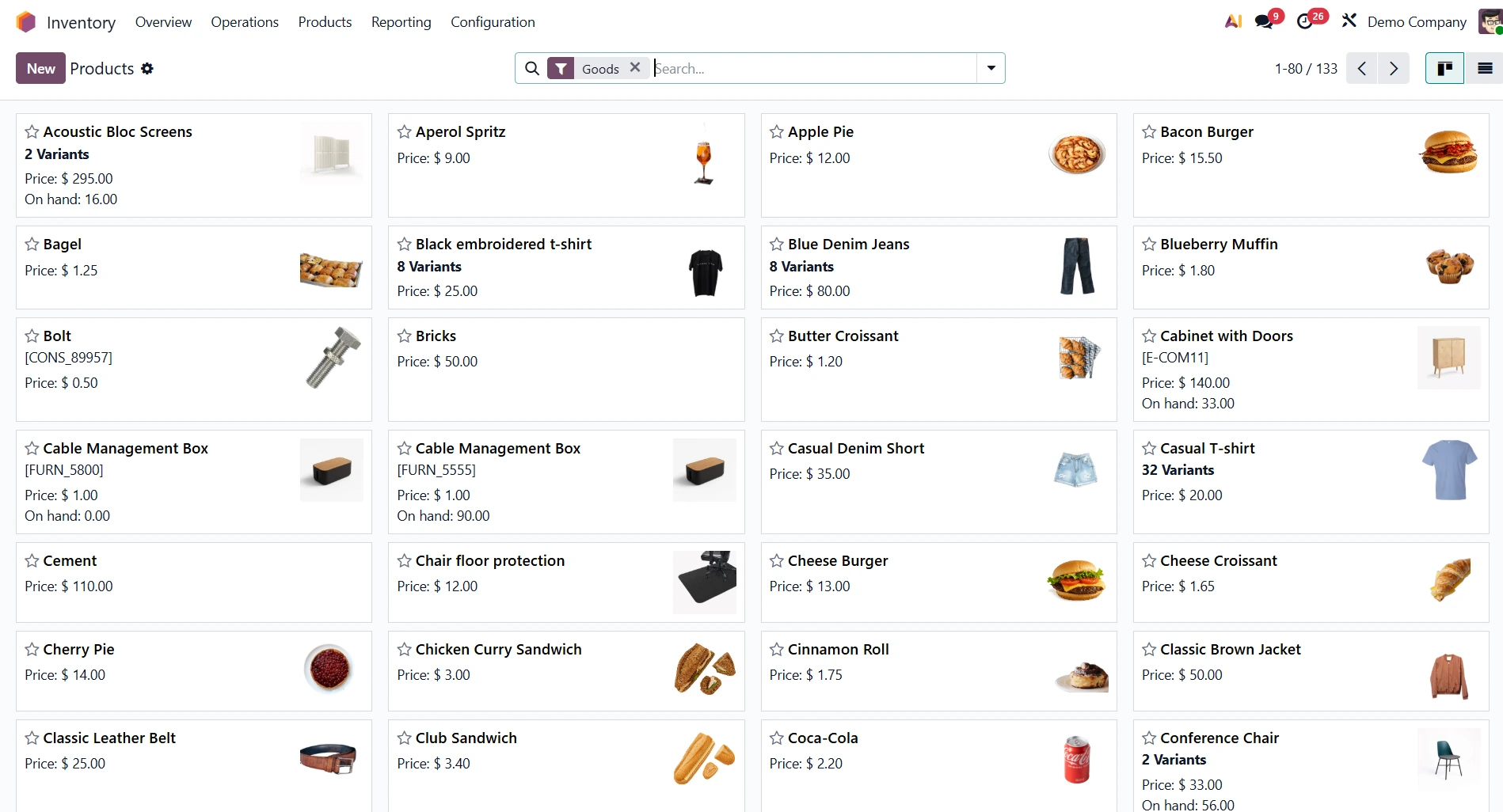
​Inventory is closely integrated with procurement, accounting, sales, and quality control. It connects with many popular courier and logistics services and offers extensive APIs for custom integrations.

Manufacturing
  • Manufacturing order planning and control.
  • Multilevel bills of materials
  • Flexible reference data configuration. 
  • Production deployment 
  • Comprehensive manufacturing analytics.

​Automation gives control over the entire production cycle, including shift assignments, routing sheets, and maintenance. Clear views of available capacity and shop schedules keep operations running smoothly. Production uses bills of materials and routing specifications that can have multiple levels. 

​Add processing stages and manage bill of materials versions through product lifecycle management (PLM). Create quality control points and schedule preventive or urgent equipment maintenance. 
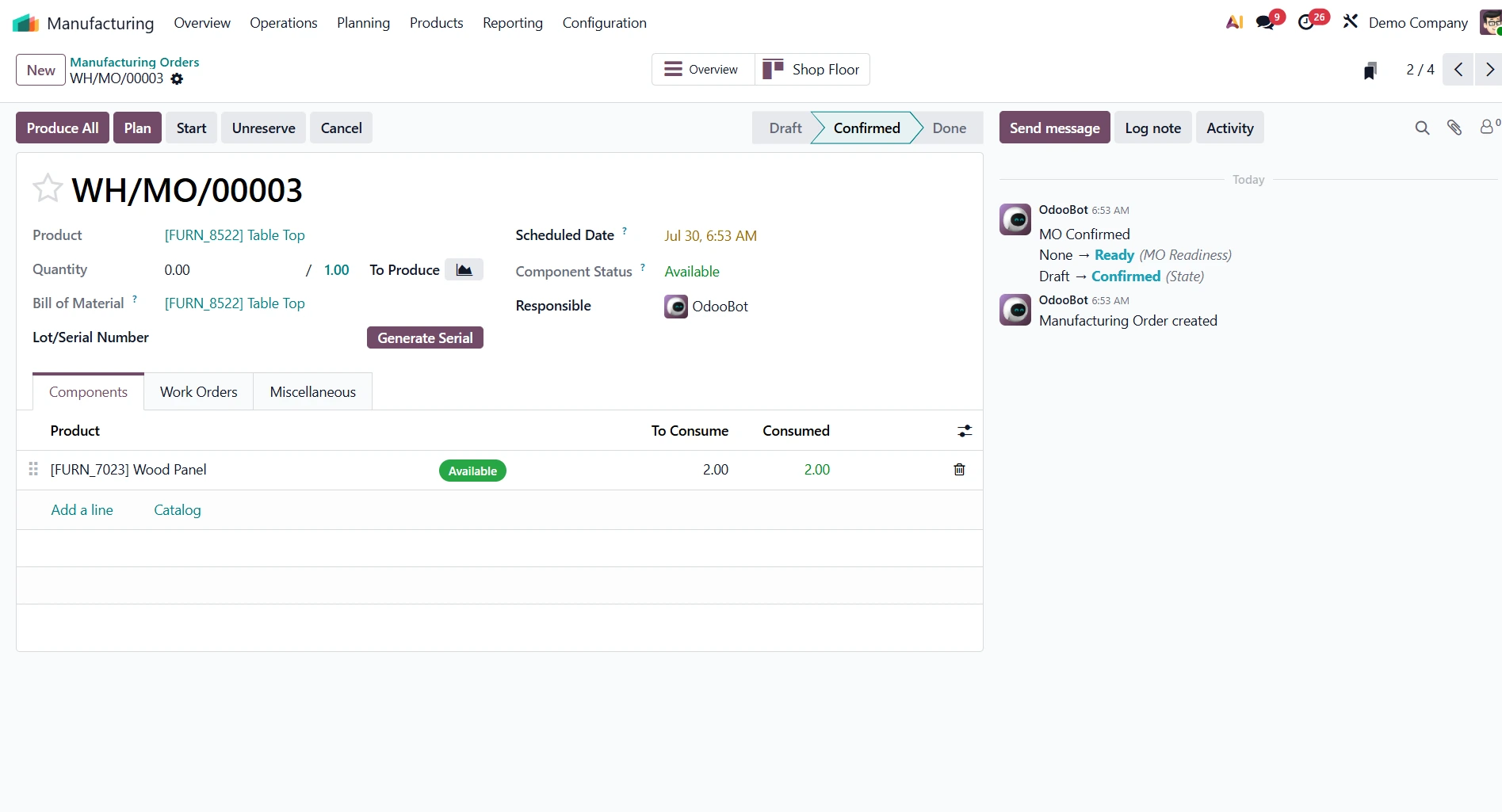
​The tool fits real shop floor conditions with barcode scanner support and an operator kiosk mode. Detailed reporting analyzes materials, labor time, and equipment utilization. Manufacturing connects procurement, maintenance, quality control, and PLM.

 Purchase
  • Create RFQs and purchase orders.
  • Automatic replenishment rules. 
  • Price list and availability overview.
  • Group purchasing. 
  • Analytics and demand forecasts.

​Reduce repetitive procurement work with rules that generate supplier orders when stock reaches minimum levels. View supplier price lists and delivery lead times in one place. 
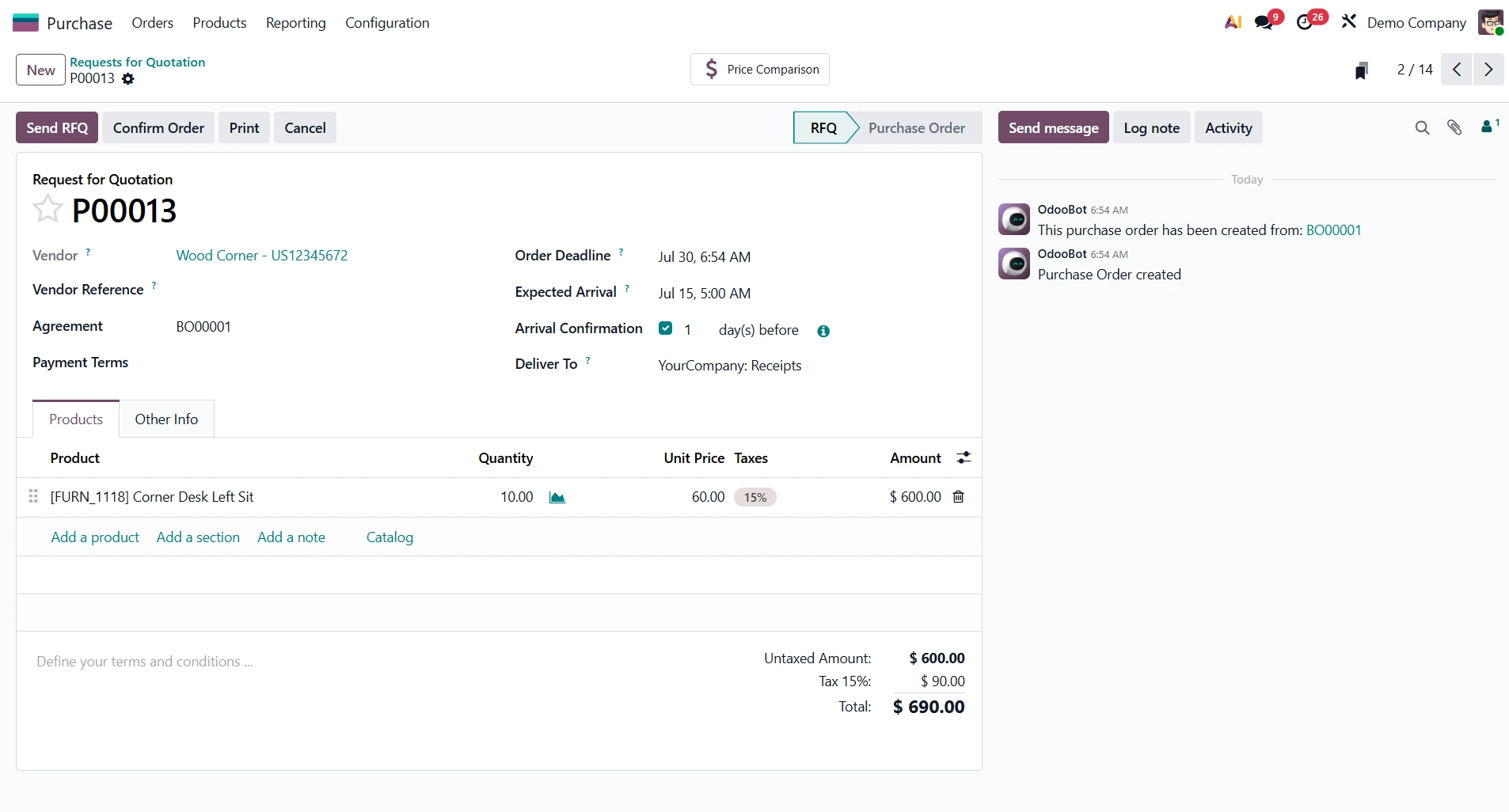
​Send tender requests to several suppliers to find the best terms. Centralize purchasing for branches or multiple companies and forecast future needs. Maintain product data, check vendor bills, and receive goods. Purchasing continuously exchanges data with inventory, sales, and financial accounting.

 Human resources
  • Employee records. 
  • Time and attendance tracking. 
  • Internal corporate portal. 
  • File sharing, discussions, and gamification.

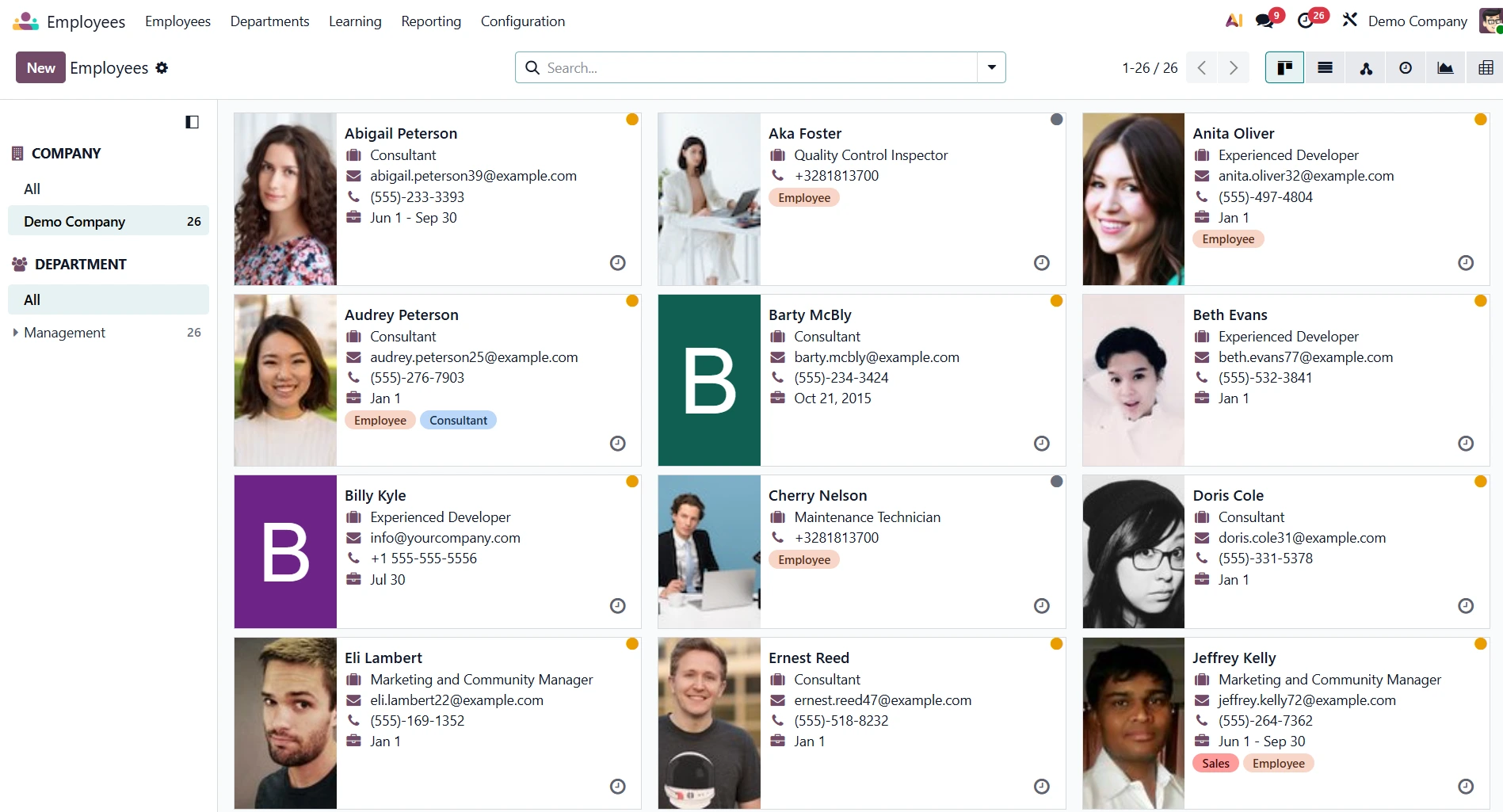
​Detailed digital employee profiles simplify HR administration. Record contract terms, attendance, and timesheets, and approve vacations, time off, and sick leave. An internal network supports group communication, document sharing, and gamification. HR is closely integrated with recruitment, appraisals, and travel expenses.
 Projects
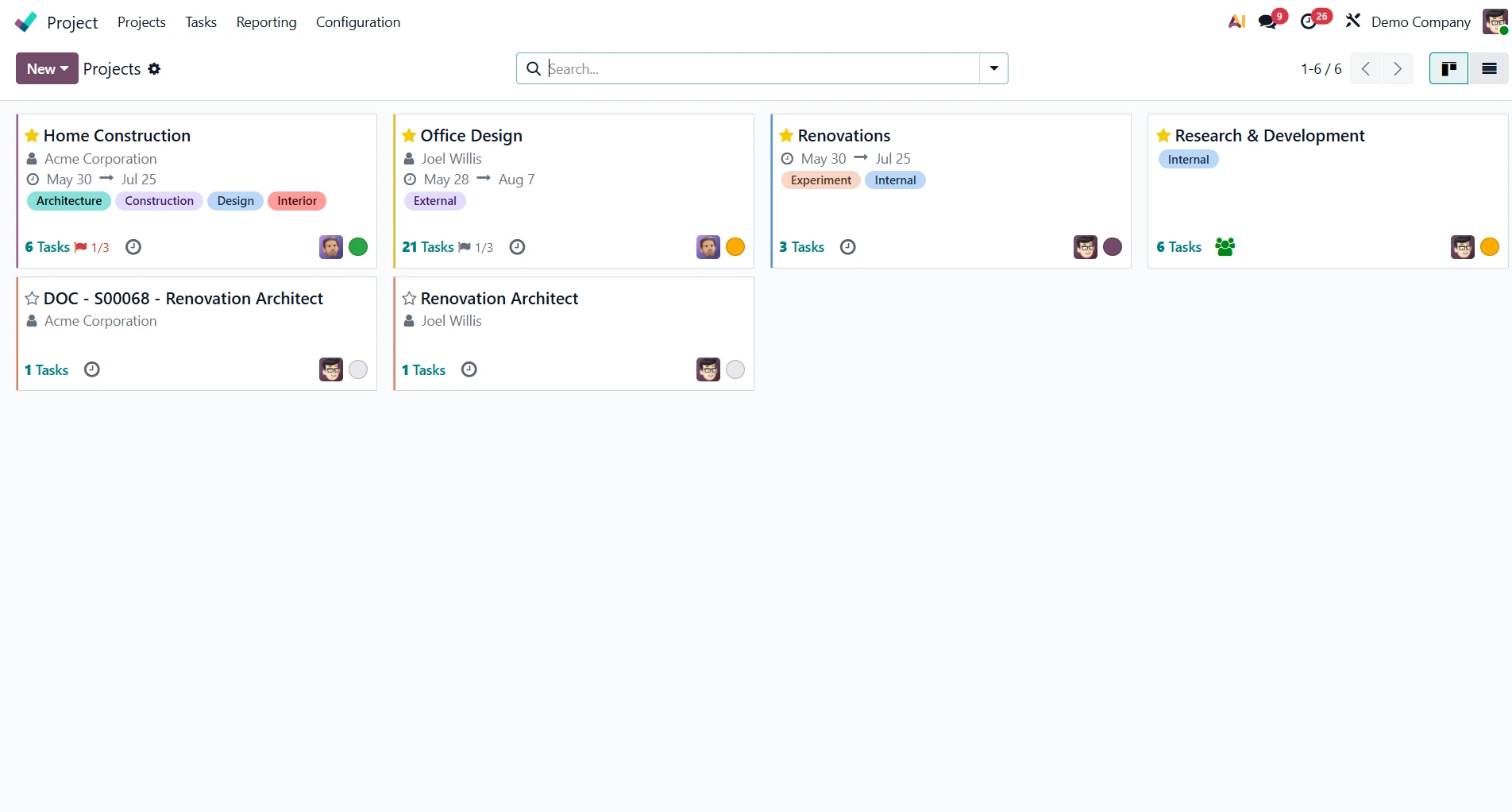
  • Task assignment and execution tracking.
  • Team communication through built-in chats and shared notes. 
  • Detailed schedules and task hierarchies. 
  • Analytics and project reporting.

​Track task progress with interactive charts and calendars. Assign responsibilities and use task cards as a central place for files, notes, and team chat. Break large projects into stages and subtasks, and analyze them through filters and grouping. Project tools integrate with invoicing, timesheets, and email campaigns.
 Subscriptions
  • Rule-based billing automation.
  • Checkout without mandatory registration.
  • Recurring charges. 
  • A portal for managing plans.


​Service businesses can use dedicated contract management to automate recurring invoices from contract templates, register incoming payments, and calculate taxes.
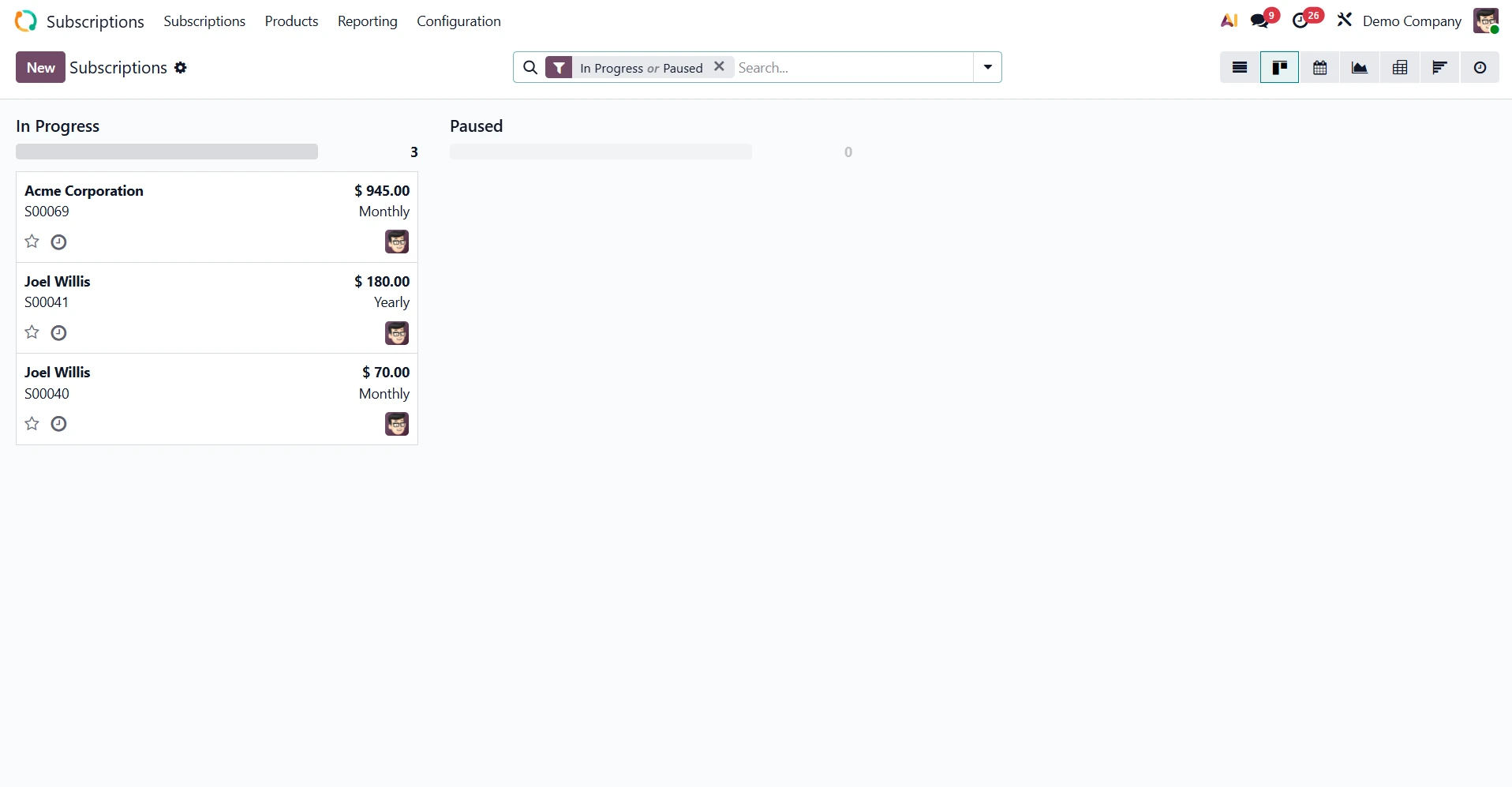
​​A convenient customer portal shows active services, supports saved cards for automatic charges, and lets users change or cancel plans themselves.


 Helpdesk
  • Request intake and processing. 
  • Agent workload monitoring. 
  • Multichannel communication with applicants.
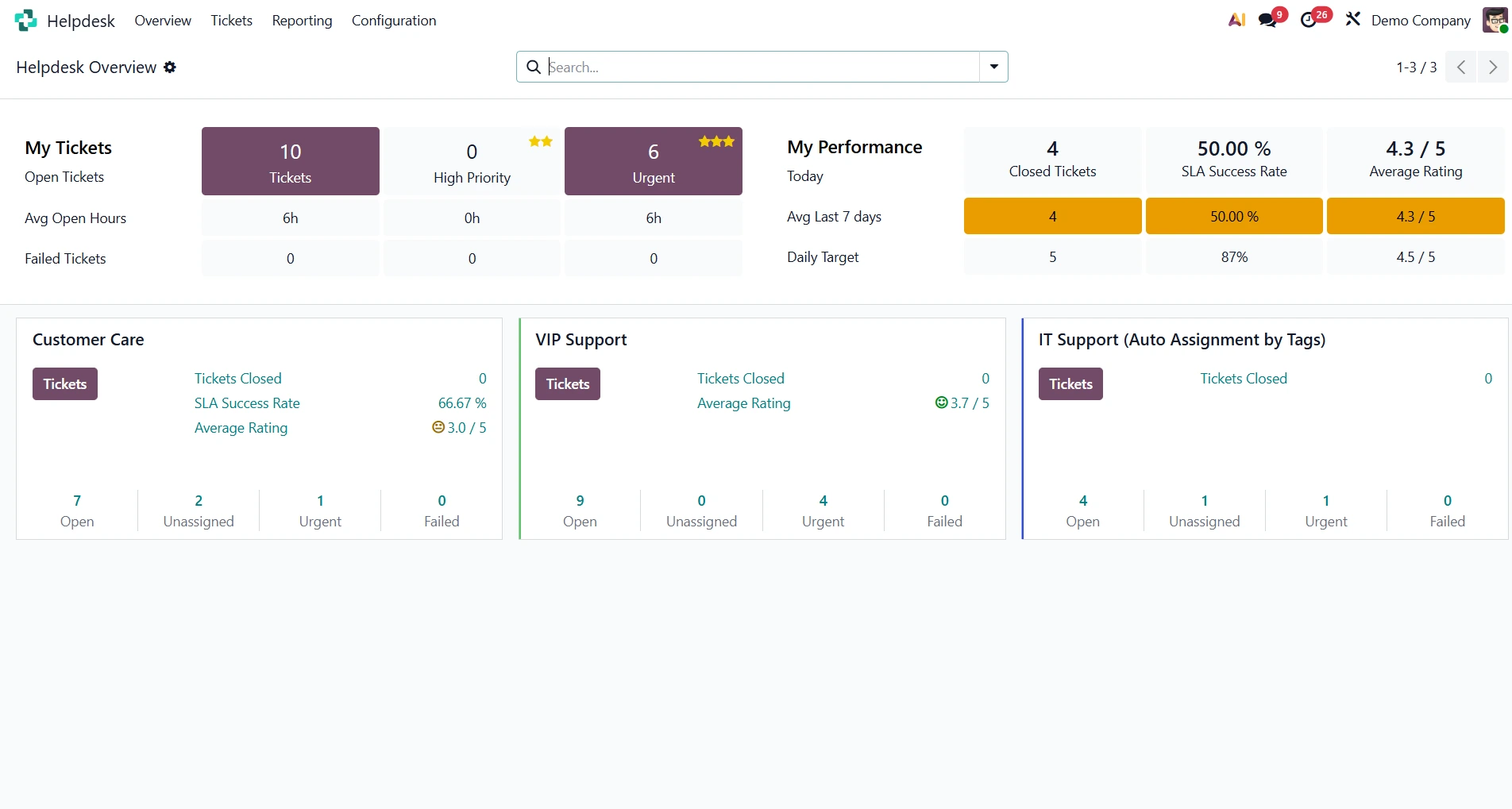
​Respond quickly and consistently to user requests. Kanban tickets show departmental workload and SLA compliance, including target response and resolution times. Requests arrive through email, website forms, and live chat. Helpdesk integrates with CRM, forums, and the knowledge base. 

 Website
  • Website Builder. 
  • Multilingual support. 
  • Domain and branding management. 
  • Extensive design customization. 
  • Built-in eCommerce, blogs, and events.
  • Search engine optimization (SEO) tools.
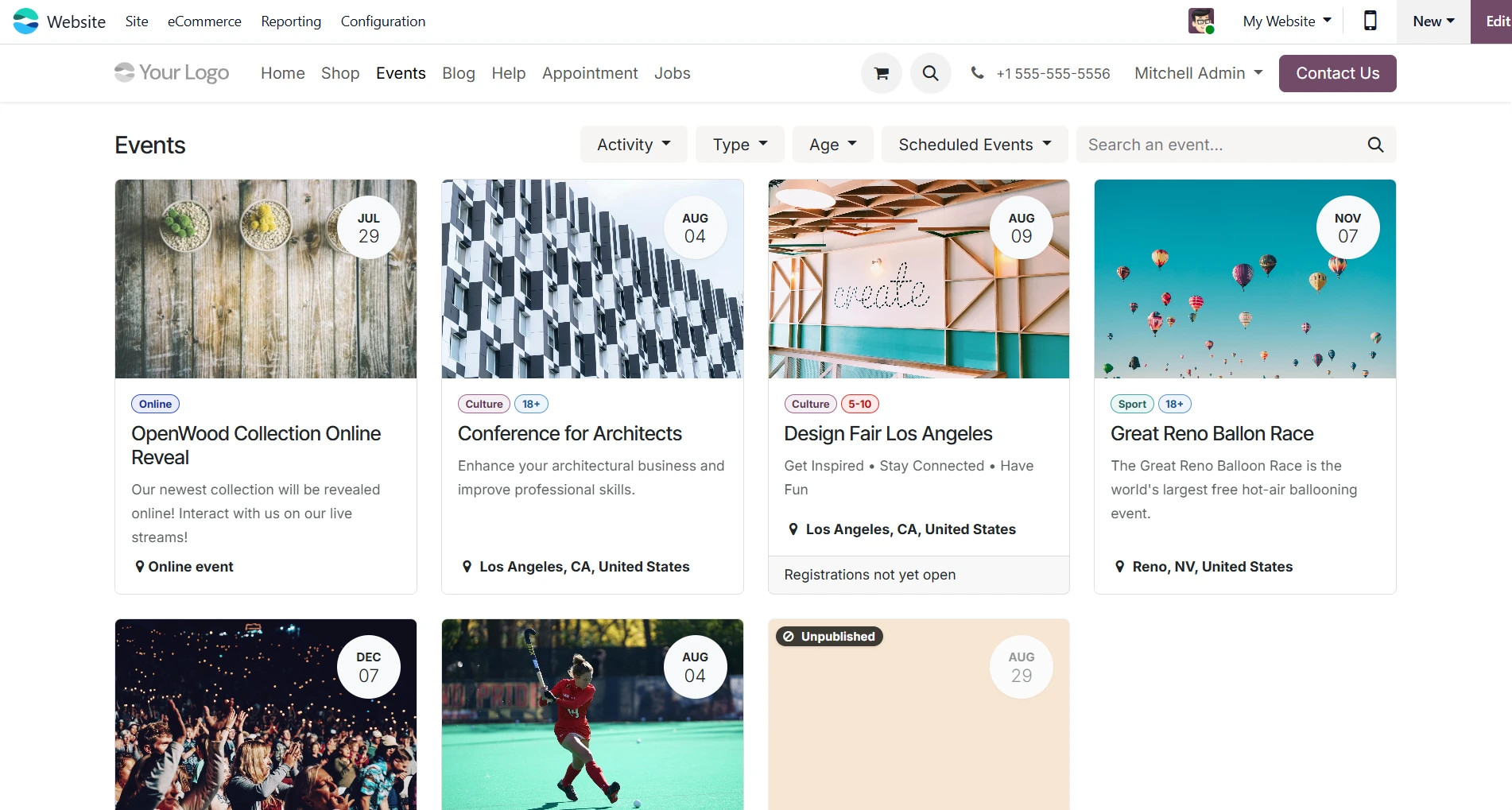
 

​Build corporate websites intuitively. Choose a theme, upload branding, and connect a domain. Add languages, social widgets, and office location maps in a few clicks. eCommerce supports delivery options and detailed product pages with dynamic pricing. Customize blocks, forms, and typography, maintain a company blog, and publish events. Built-in SEO tools optimize pages for search and attract organic traffic.

 Marketing
  • UTM parameter generation
  • Link tracking, social media campaign management, and analytics. 
  • Segmented email campaigns. 
  • Email marketing performance measurement.

​The platform provides comprehensive marketing tools. Manage social posts centrally, add media and tagged links to track conversions, schedule publication, and run and analyze coordinated campaigns.
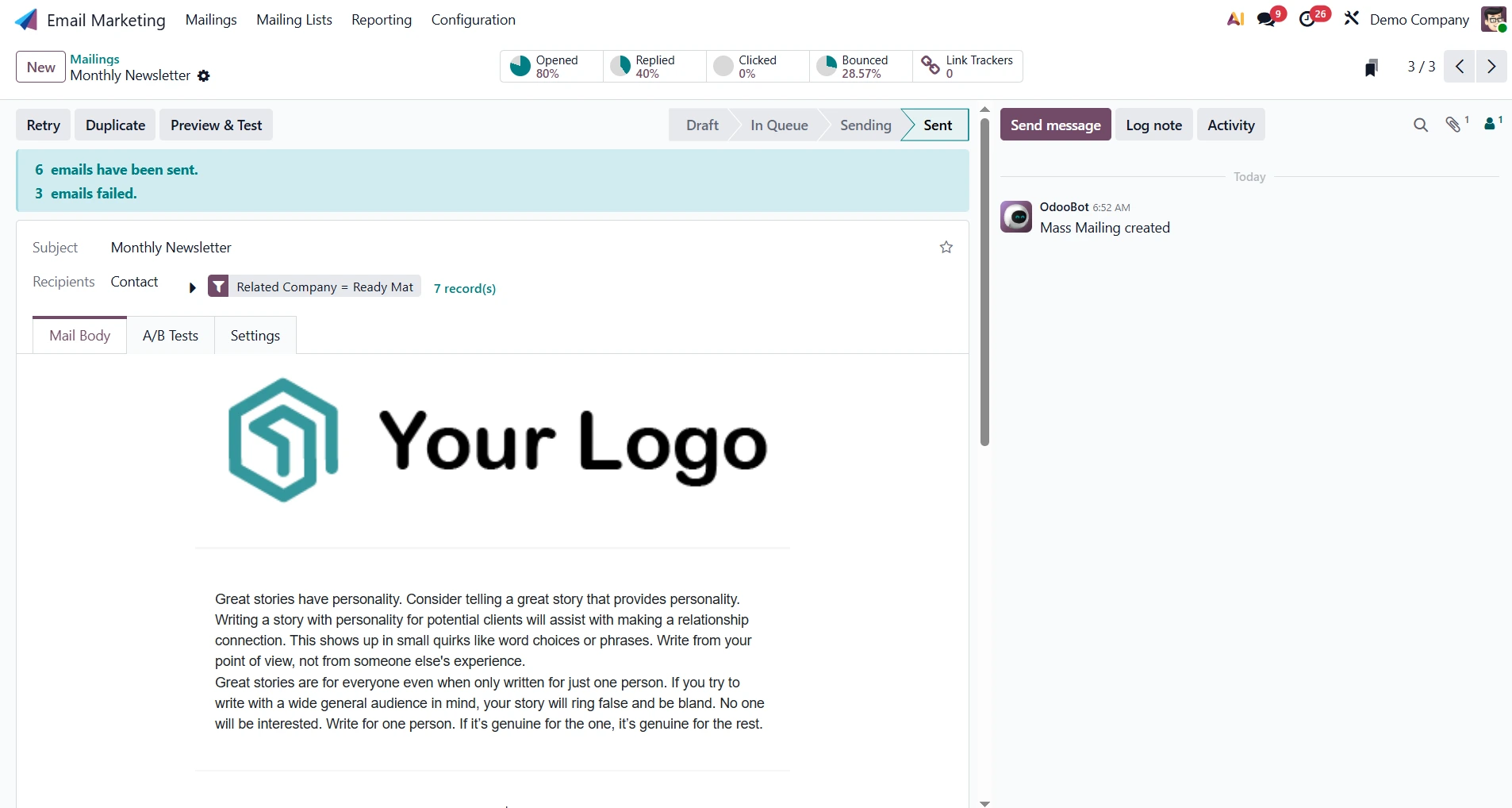
​The email marketing module creates campaigns and newsletters. Segment subscribers by defined criteria. Build emails from ready-made blocks and add files or links to company resources. After sending, track delivery, opens, and link clicks.

 Events
  • Landing pages. 
  • Events with participant surveys.
  • Electronic ticket generation. 
  • Attendee limits. 
  • Automatic email notifications

​Organize conferences, seminars, or exhibitions quickly. Generate a website page with the agenda, speakers, and registration form. Visitors book or pay through the portal and receive electronic tickets with barcodes for admission scanning.
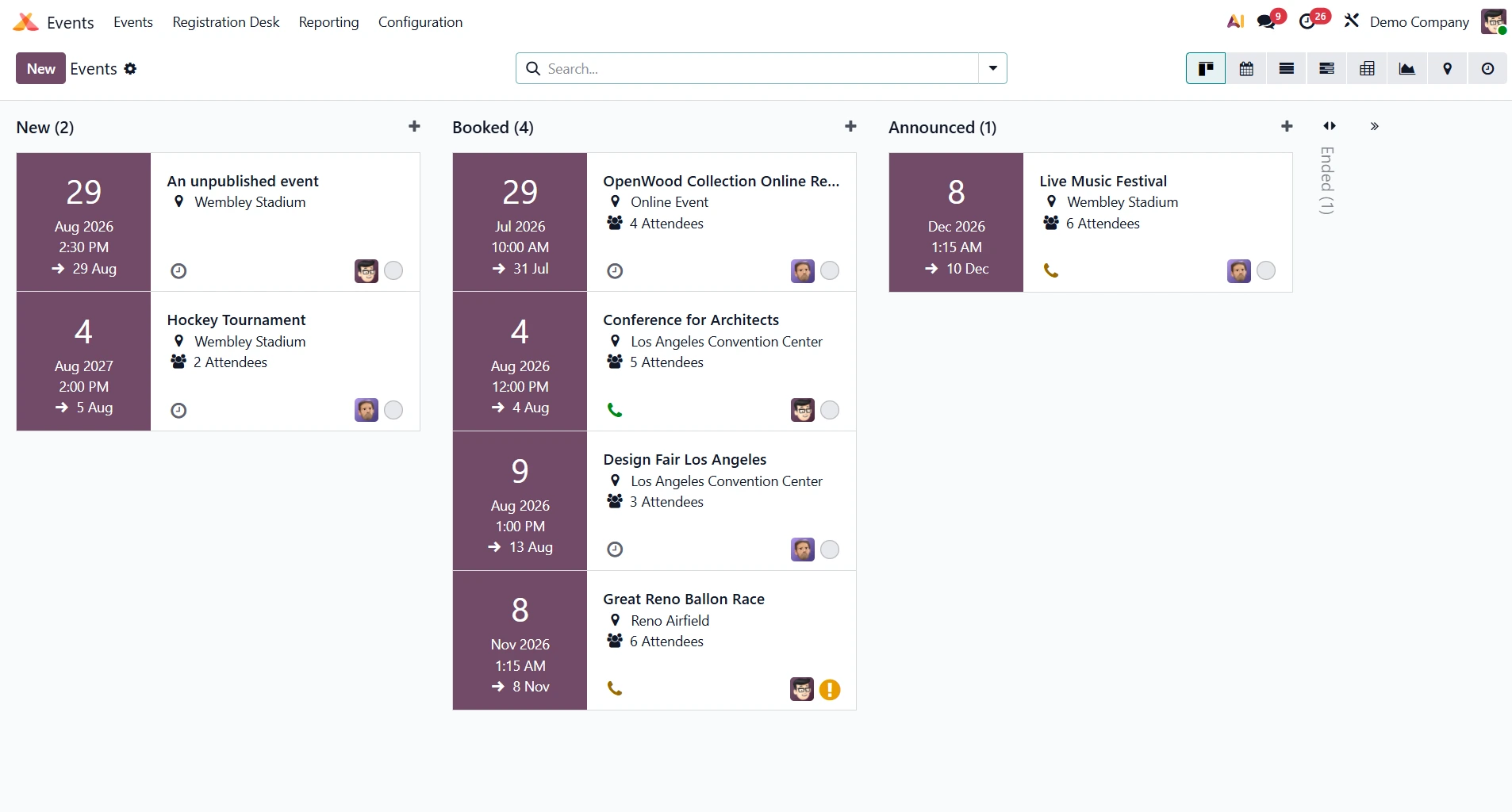
​Organizers can monitor registrations and limit venue capacity. Registration can collect details such as transfer requirements or dietary preferences. Automated email sequences remind attendees about the event.

CRM


  • Create leads from incoming emails and website forms.
  • Automatic contact geolocation.
  • Streamlined pipeline management 
  • Advanced analytics. 
  • Integration with all sales channels and marketing tools.

 The CRM module and its dashboard give you complete control over sales. Automatically capture inquiries from emails or calls and send quotations quickly, even from a mobile device. Contact management is straightforward: create, import, update, and segment contacts using various criteria. The system can identify a customer's country and city automatically, suggest duplicate records to merge when converting a lead into an opportunity, and help build contact profiles. Built-in marketing tools attract online audiences and help your sales team achieve more. Once leads arrive, a rich set of tools helps move opportunities forward, including task, call, and meeting scheduling and a customizable sales pipeline. The drag-and-drop interface makes every stage visible and speeds up opportunity management.


​Once leads become customers, additional capabilities come into play: a shared address book, individual preferences such as language, logistics, and billing details, and a complete interaction history for every account, from first contact to orders, invoices, and outstanding balances.

​
 Communication tools include email templates, mail gateways, notifications, and integrated telephony. Analytics track inquiry performance and visualize KPIs. The module connects with inventory and sales, offers a powerful API, and supports popular cloud document editors, online stores, points of sale, and marketing tools.

Sales


  • Manage customer orders and sales terms.
  • Faster quotation preparation. 
  • Organized business communication. 
  • Clear analytics and reporting. 
  • Connect every sales channel.


 Improve sales efficiency with dedicated tools. A modern interface and close CRM integration simplify pipeline management. Build professional quotations instantly using templates, products, and price lists. Increase order value with upselling tools and integrated electronic signatures.

 Sales tools make orders and contractual obligations easy to manage. Turn a quotation into an order in one click and generate invoices from the same place. The self-service portal shows purchase and delivery status. Track the full contract lifecycle, from invoicing to renewals and upselling.


​Planning tools, email templates, and multi-company support keep communications structured. Manage product records, variants, units, flexible price lists, discounts, and shipping rates in the same area. Clear analytics show revenue, upcoming activities, and performance. Track sales by region, salesperson, or department, and monitor price changes. The solution connects accounting, inventory, CRM, and eCommerce, bringing online orders, direct sales, and retail points of sale together.

Accounting


  • Intelligent data entry. 
  • Intelligent accounting entry suggestions.
  •  Multiple languages and currencies. 
  • Stronger financial control. 
  • External software connectivity. 
  • Multiple payment gateways


​Accelerate accounting with a modern interface, automated data entry, document collaboration, invoice payment matching, and bank statement synchronization. Create customer invoices in a few clicks or generate them from orders, hours worked, or delivery documents. Uploaded scans and photos are recognized automatically to create accounting entries.

​Control receivables and send automatic debtor reminders. Intelligent suggestions simplify payment allocation. OCR and batch bank transfers speed up vendor bill processing. Financial transactions are reflected immediately in the chart of accounts, with multicurrency accounting, automatic exchange rate updates, and tax calculations.

​A wide range of financial reports includes pivot tables, KPIs, dashboards, and real-time annual balance sheets. Full management accounting supports cost centers, multidimensional analytics, and budgeting. 

​Export data freely and connect external systems through a full-featured API. Send information to popular spreadsheet tools. Accept card and international wallet payments, including invoice payments by QR code. Tax localizations support multiple jurisdictions.

Inventory


  • Inventory management. 
  • Inventory management with advanced process routing.
  • Intelligent planning and matching 
  • Inventory valuation methods and cost calculation.
  • Detailed reporting.
  • Connect multiple logistics services.

​Manage warehouses from any device through a clear interface. Handle receipts, deliveries, stock counts, warehouse zones and bins, packing lists, defects, and internal transfers. Connected modules such as manufacturing extend the capabilities. Support complex logistics, including dropshipping, cross-docking, custom routes, and putaway and picking strategies.

​The module accelerates operations. Barcode scanners speed up warehouse tasks, a customer portal tracks shipments, and smart planning automates replenishment from forecasts. Manage services, consumables, physical and digital goods, with expiration dates and lot tracking. Stock valuation methods include FIFO, average cost, and standard cost, supported by comprehensive movement reports.

​Inventory is closely integrated with procurement, accounting, sales, and quality control. It connects with many popular courier and logistics services and offers extensive APIs for custom integrations.

Manufacturing


  • Manufacturing order planning and control.
  • Multilevel bills of materials
  • Flexible reference data configuration. 
  • Production deployment.
  • Comprehensive manufacturing analytics.

​Automation gives control over the entire production cycle, including shift assignments, routing sheets, and maintenance. Clear views of available capacity and shop schedules keep operations running smoothly. Production uses bills of materials and routing specifications that can have multiple levels. 

​Add processing stages and manage bill of materials versions through product lifecycle management (PLM). Create quality control points and schedule preventive or urgent equipment maintenance. 

​The tool fits real shop floor conditions with barcode scanner support and an operator kiosk mode. Detailed reporting analyzes materials, labor time, and equipment utilization. Manufacturing connects procurement, maintenance, quality control, and PLM.

 Purchase


  • Create RFQs and purchase orders.
  • Automatic replenishment rules. 
  • Price list and availability overview.
  • Group purchasing. 
  • Analytics and demand forecasts.

​Reduce repetitive procurement work with rules that generate supplier orders when stock reaches minimum levels. View supplier price lists and delivery lead times in one place. 

​Send tender requests to several suppliers to find the best terms. Centralize purchasing for branches or multiple companies and forecast future needs. Maintain product data, check vendor bills, and receive goods. Purchasing continuously exchanges data with inventory, sales, and financial accounting.

 Human resources


  • Employee records. 
  • Time and attendance tracking. 
  • Internal corporate portal. 
  • File sharing, discussions, and gamification.

​Detailed digital employee profiles simplify HR administration. Record contract terms, attendance, and timesheets, and approve vacations, time off, and sick leave. An internal network supports group communication, document sharing, and gamification. HR is closely integrated with recruitment, appraisals, and travel expenses.

 Projects


  • Task assignment and execution tracking.
  • Team communication through built-in chats and shared notes. 
  • Detailed schedules and task hierarchies. 
  • Analytics and project reporting.

​Track task progress with interactive charts and calendars. Assign responsibilities and use task cards as a central place for files, notes, and team chat. Break large projects into stages and subtasks, and analyze them through filters and grouping. Project tools integrate with invoicing, timesheets, and email campaigns.

 Subscriptions


  • Rule-based billing automation.
  • Checkout without mandatory registration.
  • Recurring charges. 
  • A portal for managing plans.


​Service businesses can use dedicated contract management to automate recurring invoices from contract templates, register incoming payments, and calculate taxes.

​​A convenient customer portal shows active services, supports saved cards for automatic charges, and lets users change or cancel plans themselves.


 Helpdesk


  • Request intake and processing. 
  • Agent workload monitoring. 
  • Multichannel communication with applicants.

​Respond quickly and consistently to user requests. Kanban tickets show departmental workload and SLA compliance, including target response and resolution times. Requests arrive through email, website forms, and live chat. Helpdesk integrates with CRM, forums, and the knowledge base. 

 Website


  • Website Builder. 
  • Multilingual support. 
  • Domain and branding management. 
  • Extensive design customization. 
  • Built-in eCommerce, blogs, and events.
  • Search engine optimization (SEO) tools.

​Build corporate websites intuitively. Choose a theme, upload branding, and connect a domain. Add languages, social widgets, and office location maps in a few clicks. eCommerce supports delivery options and detailed product pages with dynamic pricing. Customize blocks, forms, and typography, maintain a company blog, and publish events. Built-in SEO tools optimize pages for search and attract organic traffic.

 Marketing


  • UTM parameter generation
  • Link tracking, social media campaign management, and analytics.
  • Segmented email campaigns. 
  • Email marketing performance measurement.

​The platform provides comprehensive marketing tools. Manage social posts centrally, add media and tagged links to track conversions, schedule publication, and run and analyze coordinated campaigns.

The email marketing module creates campaigns and newsletters. Segment subscribers by defined criteria. Build emails from ready-made blocks and add files or links to company resources. After sending, track delivery, opens, and link clicks.

 Events


  • Landing pages. 
  • Events with participant surveys. 
  • Electronic ticket generation. 
  • Attendee limits. 
  • Automatic email notifications

​Organize conferences, seminars, or exhibitions quickly. Generate a website page with the agenda, speakers, and registration form. Visitors book or pay through the portal and receive electronic tickets with barcodes for admission scanning.

​Organizers can monitor registrations and limit venue capacity. Registration can collect details such as transfer requirements or dietary preferences. Automated email sequences remind attendees about the event.


Odoo frequently asked questions


The base edition is free and open source but has a reduced feature set. The extended edition is a commercial product. The final price depends on user numbers, company size, required modules, and hosting arrangements.

In fall 2024, a revised pricing structure was announced alongside the next major release. It offers three options: One App Free, Standard, and Custom.

The first option lets an unlimited number of employees use any one app for free. The Standard plan provides access to all features for a fixed fee, currently $10.90 per user per month after the discount.

Per user per month, including the new-customer discount with a 1-year license purchase. The standard monthly price is $13.60 per user. Custom feature development is not included in this plan.

The Custom plan includes all modules plus on-premises hosting, specialized cloud infrastructure, a built-in no-code development environment, multiple legal entities, and external API access.

Both paid plans include unlimited Odoo technical support, cloud hosting, and regular maintenance.

Cloud hosting may involve server resource charges, while hosting on your own equipment removes those hosting fees. With its extensive functionality, the platform offers strong value in the ERP market.

The free base edition has limited capabilities. The licensed commercial edition adds specialized business features and premium support. The paid edition unlocks the system's full potential; for example, complete financial accounting is unavailable in the free edition.

 Independent developers continually expand the ecosystem with extensions published in the official app store. Free and paid apps let you add specific capabilities as needed. The architecture comprises a core platform, around 30 key official modules, and tens of thousands of community extensions.

The current platform version is 19.0, introduced in fall 2025. Developers support the three most recent releases in parallel. When a new version arrives, the oldest supported version reaches end of support.

Versions 17 and 18 are currently supported in parallel, while version 16 stopped receiving updates after the release of version 19. Every major update brings significant improvements in performance and functionality.

Each system component addresses a specific need, providing a tool for every business scenario. Sales and CRM modules remain the most popular because they underpin commercial operations. Companies selling their own manufactured products online will also need website building, inventory, manufacturing, and accounting apps.
The platform is highly adaptable, letting businesses tailor logic to their needs. Modular architecture simplifies the creation and deployment of custom functional components.


The architecture is designed for smooth data exchange with external systems. Open APIs and ready-made connectors make it easy to connect the product to existing third-party software.


Custom development budgets are always project-specific. Some configuration can be handled by an in-house system administrator, while deeper changes require specialist developers. Additional estimates typically cover technical hours, consulting, and paid third-party extensions.


Migration requires mapping database architectures, normalizing reference data, and importing through built-in tools. Effort depends on the complexity of historical data.


The software was originally distributed entirely as open source, available for review, modification, and free use. It later adopted a hybrid model: the core remains open, while advanced commercial features are offered by subscription or as software as a service (SaaS).


Python and PostgreSQL. The core framework and main components are written in a widely used scripting language, with a powerful relational database for data management. Both technologies are open source and cross-platform. The web client is a single-page application. Source code for the base edition is available in public developer repositories.

Flexible access rights, strong authentication, and data encryption protect sensitive information. Privacy compliance tools manage access to personal data and support anonymization or permanent deletion on request.
Support ranges from public community forums to dedicated enterprise assistance and server administration. Service levels depend on the platform edition
A new major version of Odoo is released annually. The cloud edition also receives interim updates approximately every two to three months. Changes vary by version and hosting environment, so installed modules, configuration, and integrations must be checked for compatibility before upgrading.

Odoo frequently asked questions


The base edition is free and open source but has a reduced feature set. The extended edition is a commercial product. The final price depends on user numbers, company size, required modules, and hosting arrangements.

In fall 2024, a revised pricing structure was announced alongside the next major release. It offers three options: One App Free, Standard, and Custom.

The first option lets an unlimited number of employees use any one app for free. The Standard plan provides access to all features for a fixed fee, currently $10.90 per user per month after the discount.

Per user per month, including the new-customer discount with a 1-year license purchase. The standard monthly price is $13.60 per user. Custom feature development is not included in this plan.

The Custom plan includes all modules plus on-premises hosting, specialized cloud infrastructure, a built-in no-code development environment, multiple legal entities, and external API access.

Both paid plans include unlimited Odoo technical support, cloud hosting, and regular maintenance.

 Cloud hosting may involve server resource charges, while hosting on your own equipment removes those hosting fees. With its extensive functionality, the platform offers strong value in the ERP market.

The free base edition has limited capabilities. The licensed commercial edition adds specialized business features and premium support. The paid edition unlocks the system's full potential; for example, complete financial accounting is unavailable in the free edition.

Independent developers continually expand the ecosystem with extensions published in the official app store. Free and paid apps let you add specific capabilities as needed. The architecture comprises a core platform, around 30 key official modules, and tens of thousands of community extensions.

The current platform version is 19.0, introduced in fall 2025. Developers support the three most recent releases in parallel. When a new version arrives, the oldest supported version reaches end of support.

Versions 17 and 18 are currently supported in parallel, while version 16 stopped receiving updates after the release of version 19. Every major update brings significant improvements in performance and functionality.

Each system component addresses a specific need, providing a tool for every business scenario. Sales and CRM modules remain the most popular because they underpin commercial operations. Companies selling their own manufactured products online will also need website building, inventory, manufacturing, and accounting apps.
The platform is highly adaptable, letting businesses tailor logic to their needs. Modular architecture simplifies the creation and deployment of custom functional components.
The architecture is designed for smooth data exchange with external systems. Open APIs and ready-made connectors make it easy to connect the product to existing third-party software.
Custom development budgets are always project-specific. Some configuration can be handled by an in-house system administrator, while deeper changes require specialist developers. Additional estimates typically cover technical hours, consulting, and paid third-party extensions.
Migration requires mapping database architectures, normalizing reference data, and importing through built-in tools. Effort depends on the complexity of historical data.
The software was originally distributed entirely as open source, available for review, modification, and free use. It later adopted a hybrid model: the core remains open, while advanced commercial features are offered by subscription or as software as a service (SaaS).

Python and PostgreSQL. The core framework and main components are written in a widely used scripting language, with a powerful relational database for data management. Both technologies are open source and cross-platform. The web client is a single-page application. Source code for the base edition is available in public developer repositories.

Flexible access rights, strong authentication, and data encryption protect sensitive information. Privacy compliance tools manage access to personal data and support anonymization or permanent deletion on request.
Support ranges from public community forums to dedicated enterprise assistance and server administration. Service levels depend on the platform edition
A new major version of Odoo is released annually. The cloud edition also receives interim updates approximately every two to three months. Changes vary by version and hosting environment, so installed modules, configuration, and integrations must be checked for compatibility before upgrading.

Book an Odoo demo with an instructor today 

Discover how Odoo can help your business grow.

Request a demo

Book 

an Odoo demo with

an analyst today 

Discover how Odoo can help your business grow.

Request a demo