
Odoo integration with n8n
We connect Odoo to external services with controlled data exchange. APKO designs triggers, processing rules, transformations, error controls, and failure procedures.
Odoo integration with n8n
We connect Odoo to external services with controlled data exchange. APKO designs triggers, processing rules, transformations, error controls, and failure procedures.
What Odoo and n8n can do together
n8n can act as a middleware layer between Odoo and other systems, passing data in sequence and triggering the actions defined by the business process.

Connecting the right systems
We integrate Odoo with online stores, CRM, communication tools, databases, and corporate services. Connections depend on project needs and available system interfaces.

End-to-end operations
A single workflow can retrieve external data, validate and transform it, then create or update an Odoo record. The sequence is documented in the integration design beforehand.

The right data exchange method
Processes can start from events, incoming requests, or schedules. Exchange frequency depends on business needs and connected systems' capabilities.

Controlled logic
Workflows can include conditions, routing, and data transformations. Where standard nodes are insufficient, we use API calls or custom development with the scope assessed in advance.
What Odoo and n8n can do together
n8n can act as a middleware layer between Odoo and other systems, passing data in sequence and triggering the actions defined by the business process.
Connecting the right systems
We integrate Odoo with online stores, CRM, communication tools, databases, and corporate services. Connections depend on project needs and available system interfaces.
End-to-end operations
A single workflow can retrieve external data, validate and transform it, then create or update an Odoo record. The sequence is documented in the integration design beforehand.
The right data exchange method
Processes can start from events, incoming requests, or schedules. Exchange frequency depends on business needs and connected systems' capabilities.
Controlled logic
Workflows can include conditions, routing, and data transformations. Where standard nodes are insufficient, we use API calls or custom development with the scope assessed in advance.
What Odoo and n8n integration includes
Before development, APKO defines the systems to connect and the rules governing their interaction.
What Odoo and n8n integration includes
Before development, APKO defines the systems to connect and the rules governing their interaction.
System responsibilities
We define where master data is created and stored, which system owns it, and which applications can change specific fields.
Trigger condition
We define the trigger: order creation, status change, form submission, incoming request, or scheduled time.
Data mapping
We map fields, formats, reference data, and required values, including cleansing and transformation where needed.
Checks and workflows
We define execution conditions, process paths, and actions for exceptions. Decisions requiring human accountability remain with employees where appropriate.
Duplicate prevention
We use identifiers and validation to prevent retries from creating duplicate records or repeating completed operations.
Error monitoring
We define logged events, retry conditions, and who is notified when a workflow cannot finish automatically.
- Inquiries and opportunities
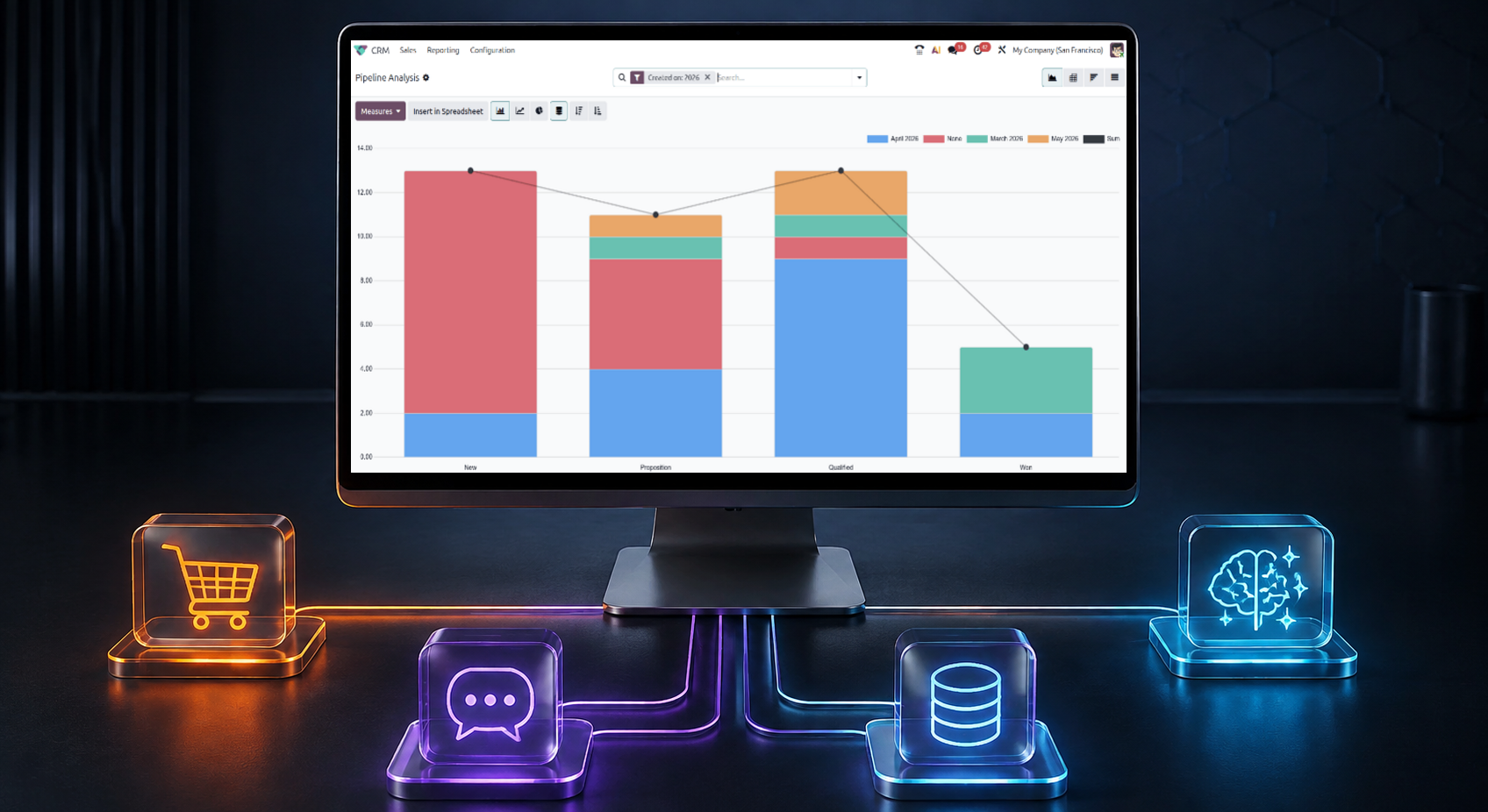
Website or external service inquiries flow into Odoo CRM. Before creating an opportunity, the workflow can validate required data and check for an existing customer.
- Orders and notifications
Order changes in Odoo trigger defined actions, such as notifications, task creation, or sending agreed data to another system.
- Reference data and documents
Update customers, products, and other records under defined rules. Exchange direction and the master data source are specified for each dataset.
- Incoming messages and service requests
Workflows can register requests, classify them by rules, and assign owners. AI supports the process where needed, while agreed rules and employee decisions remain in control.
- Inquiries and opportunities
Website or external service inquiries flow into Odoo CRM. Before creating an opportunity, the workflow can validate required data and check for an existing customer.
- Orders and notifications
Order changes in Odoo trigger defined actions, such as notifications, task creation, or sending agreed data to another system.
- Reference data and documents
Update customers, products, and other records under defined rules. Exchange direction and the master data source are specified for each dataset.
- Incoming messages and service requests
Workflows can register requests, classify them by rules, and assign owners. AI supports the process where needed, while agreed rules and employee decisions remain in control.
How APKO designs and launches integrations
We begin with a specific workflow and measurable outcome. Once stability is confirmed, the integration can expand step by step.
- Defining the task: We describe the trigger, process participants, systems, data to be exchanged, and expected outcome. We clarify access restrictions, transaction volumes, and acceptable synchronization delays.
- Build and testing: We configure the workflow in a test environment and verify standard and exceptional cases. We also test access rights, retries, incomplete data, and system unavailability.
- Design: We design data flows, map fields and identifiers, and define transformation, validation, retry, and error handling rules.
- Launch and support: We move the tested workflow into production and monitor the first execution cycles. We analyze errors, document changes, and add new branches after assessing their impact on the existing process.
How APKO designs and launches integrations
We begin with a specific workflow and measurable outcome. Once stability is confirmed, the integration can expand step by step.
- 1. Defining the task: We describe the trigger, process participants, systems, data to be exchanged, and expected outcome. We clarify access restrictions, transaction volumes, and acceptable synchronization delays.
- 2. Design: We design data flows, map fields and identifiers, and define transformation, validation, retry, and error handling rules.
- 3. Build and testing: We configure the workflow in a test environment and verify standard and exceptional cases. We also test access rights, retries, incomplete data, and system unavailability.
- Launch and support: We move the tested workflow into production and monitor the first execution cycles. We analyze errors, document changes, and add new branches after assessing their impact on the existing process.