
For large companies and corporations
A unified platform for departments, data, and end-to-end business processes
An enterprise solution for complex business processes
- One system for finance, sales, purchasing, warehouses, projects, and more
- Configuration reflecting company structure, user roles, and internal procedures
- Support for multiple legal entities, branches, and departments
- Phased implementation aligned with business priorities
Odoo for large companies and enterprises
A unified platform for departments, data, and end-to-end business processes
An enterprise solution for complex business processes
- One system for finance, sales, purchasing, warehouses, projects, and more
- Configuration reflecting company structure, user roles, and internal procedures
- Support for multiple legal entities, branches, and departments
- Phased implementation aligned with business priorities
In large companies, processes span departments, legal entities, and regions. Finance, sales, purchasing, inventory, manufacturing, and projects often run in separate systems, requiring manual reconciliation. Odoo brings these areas into a shared environment, establishing common working practices while preserving the autonomy individual teams need.
Projects start with discovery of current processes. We review roles, approvals, documents, reports, and integrations, then develop a target model with key users. This identifies standard capabilities, configuration, and development needs in advance.
We start with standard platform capabilities and extend them only where business requirements justify it. This simplifies maintenance and future upgrades and keeps project scope under control. Implementation can be phased by function, company, or region.
The company gains a manageable system with shared reference data, clear responsibilities, and access controls. As the business grows, new departments, processes, and corporate integrations can be added without rebuilding the existing environment.
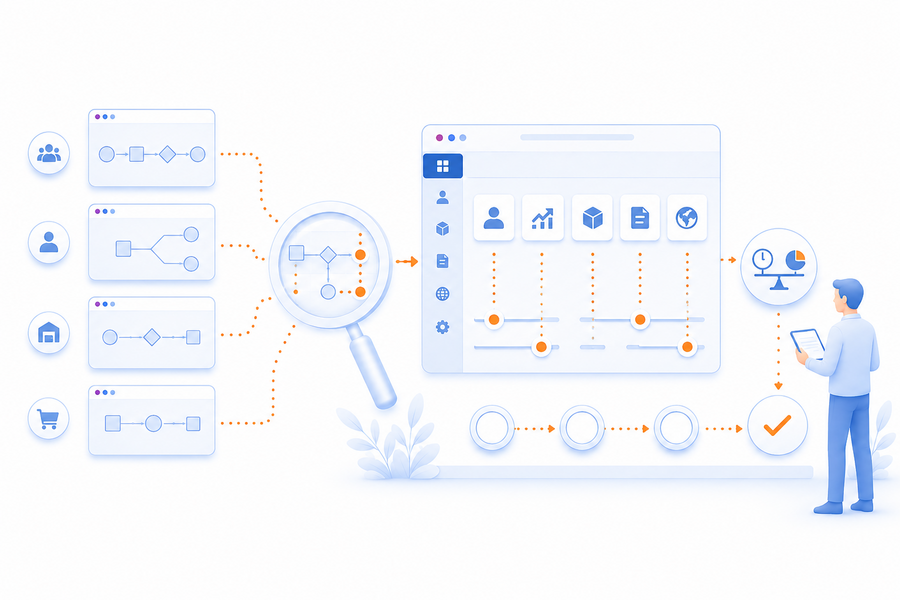
In large companies, processes span departments, legal entities, and regions. Finance, sales, purchasing, inventory, manufacturing, and projects often run in separate systems, requiring manual reconciliation. Odoo brings these areas into a shared environment, establishing common working practices while preserving the autonomy individual teams need.
Projects start with discovery of current processes. We review roles, approvals, documents, reports, and integrations, then develop a target model with key users. This identifies standard capabilities, configuration, and development needs in advance.
We start with standard platform capabilities and extend them only where business requirements justify it. This simplifies maintenance and future upgrades and keeps project scope under control. Implementation can be phased by function, company, or region.
The company gains a manageable system with shared reference data, clear responsibilities, and access controls. As the business grows, new departments, processes, and corporate integrations can be added without rebuilding the existing environment.
Odoo benefits for large businesses
Odoo benefits for large businesses
- Process-aligned configuration: the system reflects your company's structure, roles, and internal procedures.
- Phased implementation: modules and departments are introduced in an agreed sequence.
- An intuitive interface: employees use consistent forms, statuses, and actions.
- Cost efficiency: prioritizing standard features reduces unnecessary custom development.
- Expert support: the team helps with analysis, launch, and ongoing system development.
- Project and resource management: tasks, deadlines, assignees, and workloads are brought together in one environment.
- Flexibility and scalability: the solution evolves with your company and its organizational structure.
- Performance visibility: managers receive consistent data for monitoring and analysis.
- Supporting growth: new companies, branches, and business areas can be added to the system.
- Modules and integrations: functionality is extended through Odoo apps and external services.
Odoo implementation for large companies: from discovery to launch
Odoo implementation for large companies: from discovery to launch
Enterprise implementation spans multiple departments, teams, and systems. Alongside Odoo configuration, it requires shared working practices, clear responsibilities, document workflows, and data requirements.
We first review existing processes and define the future system's goals. Standard Odoo capabilities form the foundation, with configuration and development added only where justified business requirements need them.
We then define the target model: apps, user roles, access levels, reference data, reporting, and integrations. This establishes project boundaries, data migration procedures, and the rollout sequence in advance.
Rollout can be phased by module, legal entity, or region. This keeps changes under control, supports gradual user training, and allows configuration to be refined from feedback without overburdening the business.
One connected financial environment in Odoo
Odoo Accounting connects customer invoices, vendor bills, payments, banking transactions, analytic accounting, and financial reporting. With the right configuration, the system supports multiple companies, access controls, and comparisons of financial performance across departments and business areas.
An intuitive interface for everyday work
Odoo workspaces reflect employee roles, departments, and access levels. Users see the apps, documents, and actions they need, with consistent forms and statuses across processes. Training and documented workflows accelerate adoption and reduce everyday errors.
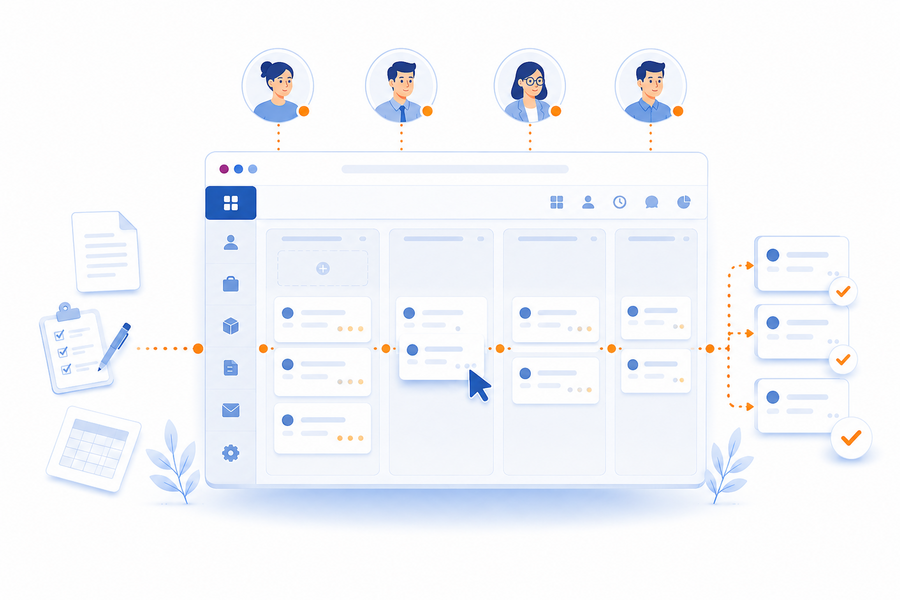
An intuitive interface for everyday work
Odoo workspaces reflect employee roles, departments, and access levels. Users see the apps, documents, and actions they need, with consistent forms and statuses across processes. Training and documented workflows accelerate adoption and reduce everyday errors.
Project management and resource planning
Project management and resource planning
Odoo Project lets you manage projects, stages, tasks, dependencies, and milestones, assign owners, and track deadlines. Planning allocates employees and other resources based on roles, schedules, and availability. Connected data helps managers monitor progress and respond to issues promptly.
We configure project management around your company's structure and can connect it to sales, timesheets, expenses, and financial documents. After launch, our team supports users, helps refine processes, and develops functionality as new needs arise.
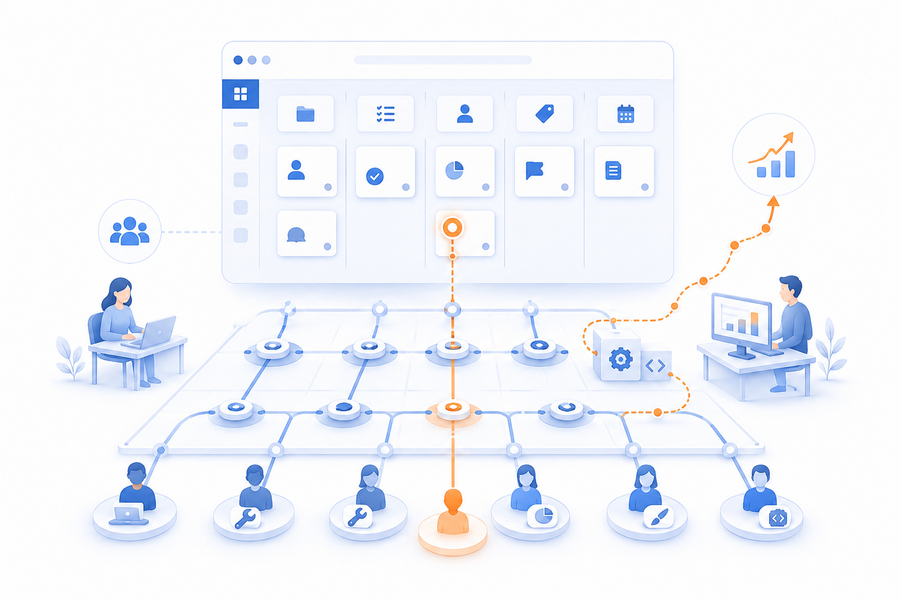
We configure project management around your company's structure and can connect it to sales, timesheets, expenses, and financial documents. After launch, our team supports users, helps refine processes, and develops functionality as new needs arise.
Optimize enterprise business processes
Implementing Odoo is an opportunity to improve existing processes: reduce duplicate data entry, replace disconnected spreadsheets, simplify approvals, and establish consistent document handling. The system connects departments and makes workflows clear to employees and managers.
The project goes beyond transferring outdated procedures into a new system. We preserve useful business practices and remove unnecessary steps and duplication. The result is a transparent, manageable process that can be monitored and improved.
The financial impact of process optimization
Implementation results can be assessed through specific metrics: processing times, errors and manual steps, reporting speed, inventory turnover, and resource utilization. Define evaluation criteria before the project begins so baseline and actual results can be compared after launch.
A phased implementation automates priority processes first, then expands to other areas. Actual results depend on the solution scope, source data quality, employee involvement, and consistent adoption of new working practices.
Optimize enterprise business processes
The project goes beyond transferring outdated procedures into a new system. We preserve useful business practices and remove unnecessary steps and duplication. The result is a transparent, manageable process that can be monitored and improved.
The financial impact of process optimization
A phased implementation automates priority processes first, then expands to other areas. Actual results depend on the solution scope, source data quality, employee involvement, and consistent adoption of new working practices.