Odoo migration services
We migrate agreed reference data, opening balances, and required documents to Odoo after checking structure, quality, and relationships.
Odoo migration services
We migrate agreed reference data, opening balances, and required documents to Odoo after checking structure, quality, and relationships.
Data migration project options

We prepare data from ERP, CRM, accounting systems, and working files for migration. Together with the customer, we identify the master data, balances, documents, and history needed in the new system.

We assess data, configuration, and custom modules separately. For incompatible customizations, we determine the adaptation scope and test critical workflows in the target environment.

We consolidate data from branches, departments, or separate systems into one structure. Before import, we agree on master data, formats, and duplicate-handling rules.
Data migration project options
We prepare data from ERP, CRM, accounting systems, and working files for migration. Together with the customer, we identify the master data, balances, documents, and history needed in the new system.
We assess data, configuration, and custom modules separately. For incompatible customizations, we determine the adaptation scope and test critical workflows in the target environment.
We consolidate data from branches, departments, or separate systems into one structure. Before import, we agree on master data, formats, and duplicate-handling rules.
The scope depends on data sources, source information quality, and the structure of the future system. Every stage ends with a concrete result that can be reviewed and approved before the next part of the project begins.
The scope depends on data sources, source information quality, and the structure of the future system. Every stage ends with a concrete result that can be reviewed and approved before the next part of the project begins.
1. Define the migration scope
In a workshop, we define sources, required data categories, history depth, and reviewers. Together with the customer, we decide what to migrate, archive, or recreate.
This stage delivers an agreed dataset scope and acceptance criteria.

1. Define the migration scope
In a workshop, we define sources, required data categories, history depth, and reviewers. Together with the customer, we decide what to migrate, archive, or recreate.
This stage delivers an agreed dataset scope and acceptance criteria.
We obtain sample exports and compare their structure with future system models. For each dataset, we define field mappings, transformation rules, reference relationships, and required values.
We separately document gaps, duplicates, inconsistent formats, and other data to correct before loading. The migration method follows data structure and project requirements rather than a preset record count.
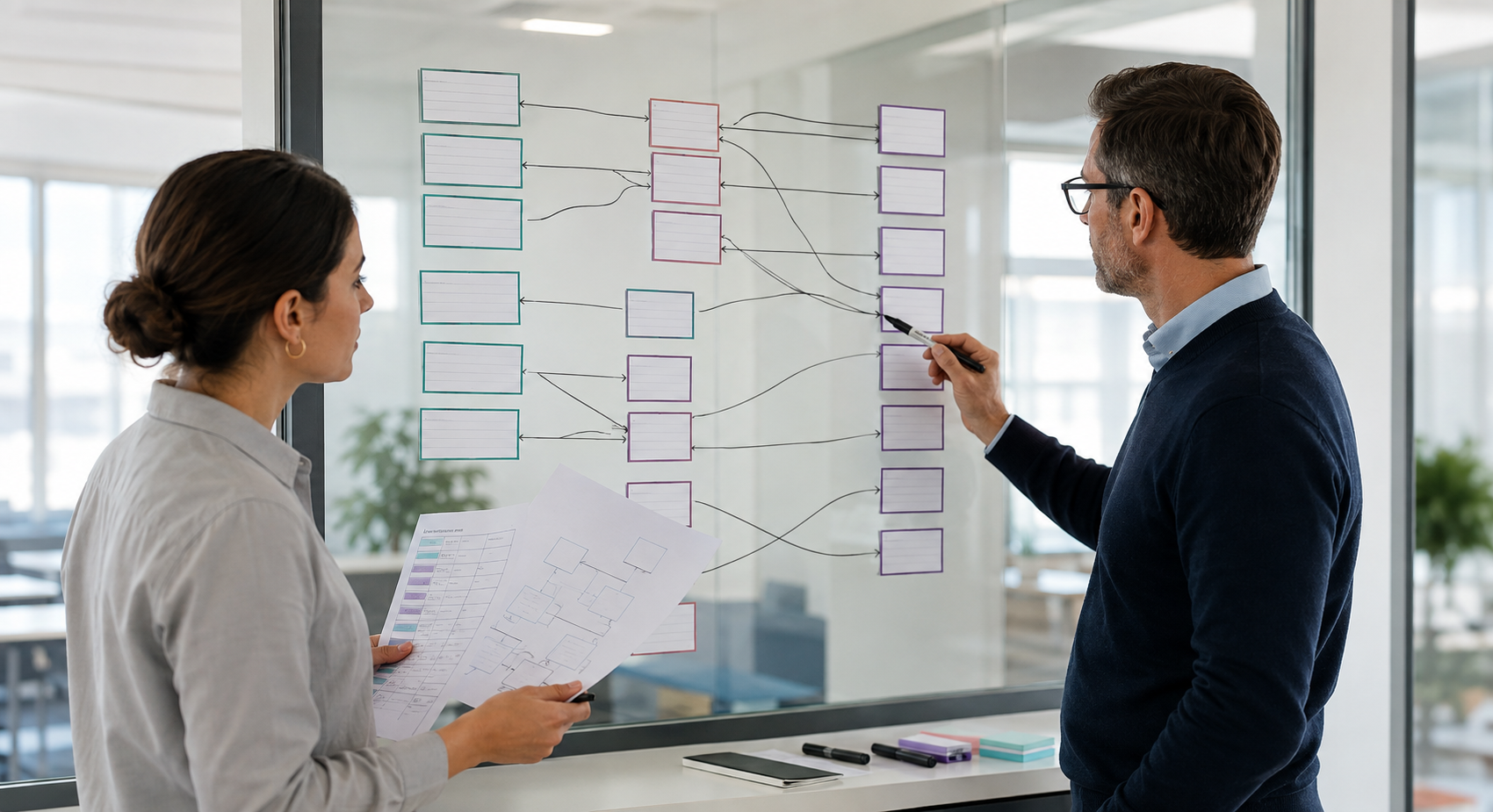
We obtain sample exports and compare their structure with future system models. For each dataset, we define field mappings, transformation rules, reference relationships, and required values.
We separately document gaps, duplicates, inconsistent formats, and other data to correct before loading. The migration method follows data structure and project requirements rather than a preset record count.
Using the agreed mapping, we prepare import files, loading scripts, or integration mechanisms. We then run a trial migration in a test environment and verify import logs, object relationships, and key user workflows.
Errors are corrected, then the import is repeated until the agreed quality criteria are met.

Using the agreed mapping, we prepare import files, loading scripts, or integration mechanisms. We then run a trial migration in a test environment and verify import logs, object relationships, and key user workflows.
Errors are corrected, then the import is repeated until the agreed quality criteria are met.
We compare record counts, control totals, balances, document statuses, and relationships. Customer representatives review their functional data and log findings.
We also agree on the production migration date, source system change freeze, action sequence, control checks, and backup rollback procedure for critical errors.

We compare record counts, control totals, balances, document statuses, and relationships. Customer representatives review their functional data and log findings.
We also agree on the production migration date, source system change freeze, action sequence, control checks, and backup rollback procedure for critical errors.
At the agreed time, we obtain the final export, load it into the production Odoo database, and reconcile the results. After users begin work, we track migration-related requests, correct discrepancies, and document changes.
The stage ends after agreed data is accepted and critical processes are confirmed operational.
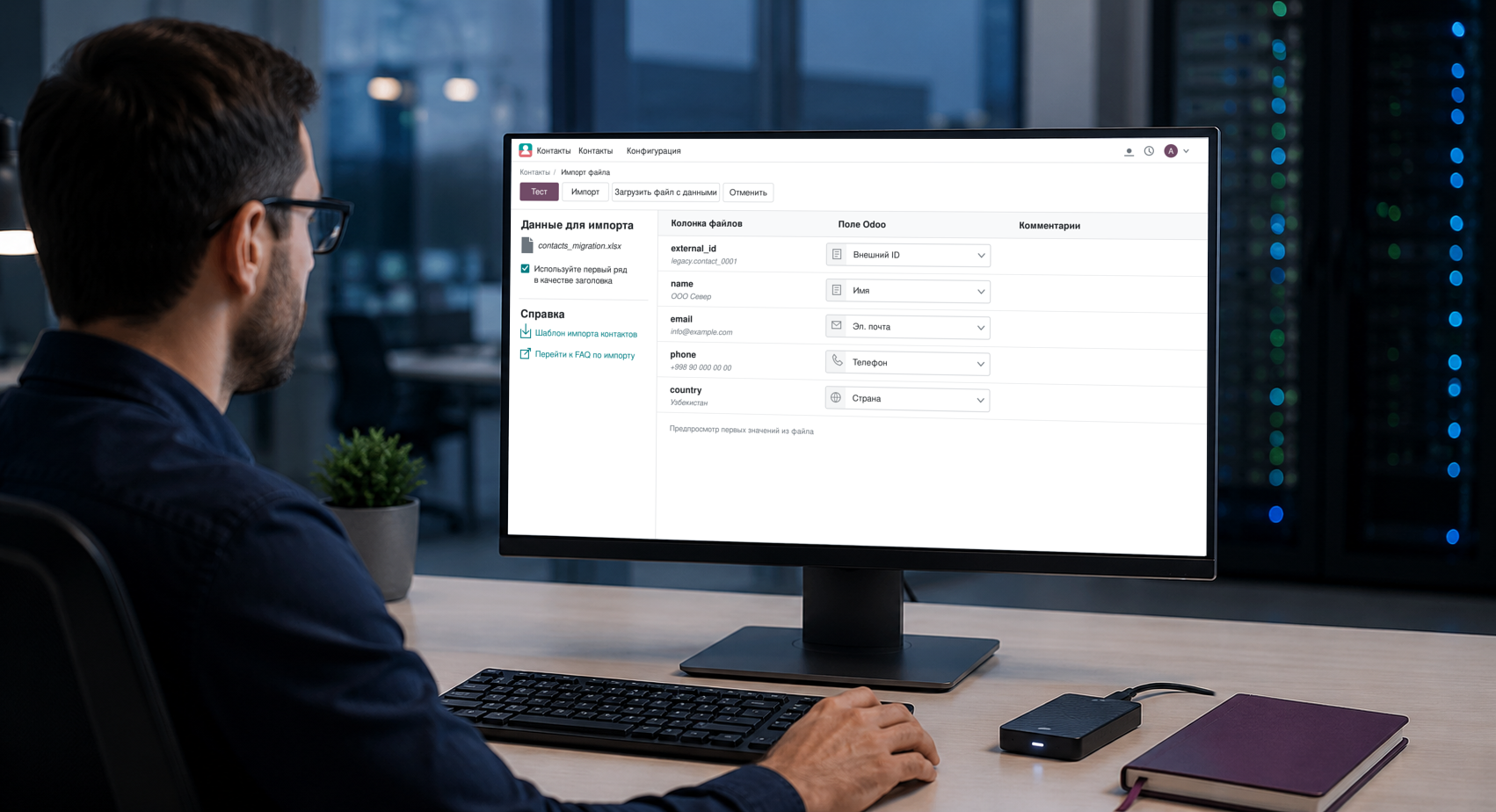
At the agreed time, we obtain the final export, load it into the production Odoo database, and reconcile the results. After users begin work, we track migration-related requests, correct discrepancies, and document changes.
The stage ends after agreed data is accepted and critical processes are confirmed operational.