
For startups
One platform for a growing company's core processes
A system that grows with your business
- Connected apps for CRM, sales, projects, purchasing, inventory, and financial documents
- Start with priority processes and keep the initial project focused
- Configure roles, stages, documents, and reporting for actual needs
- Add apps and integrations as the company grows
Early-stage startups test their business model, attract customers, and build internal processes simultaneously. Information often sits in spreadsheets, messages, and separate services. Odoo organizes customers, sales, tasks, documents, and other operations in connected apps.
With limited resources, defining the initial scope is especially important. APKO reviews processes and priorities, identifying what standard Odoo handles, what needs configuration, and what requires integration or development.
Depending on the starting point, a project may include data preparation and migration, app configuration, key scenario testing, and user training. After launch, support and development follow actual business needs rather than hypothetical requirements far in the future.
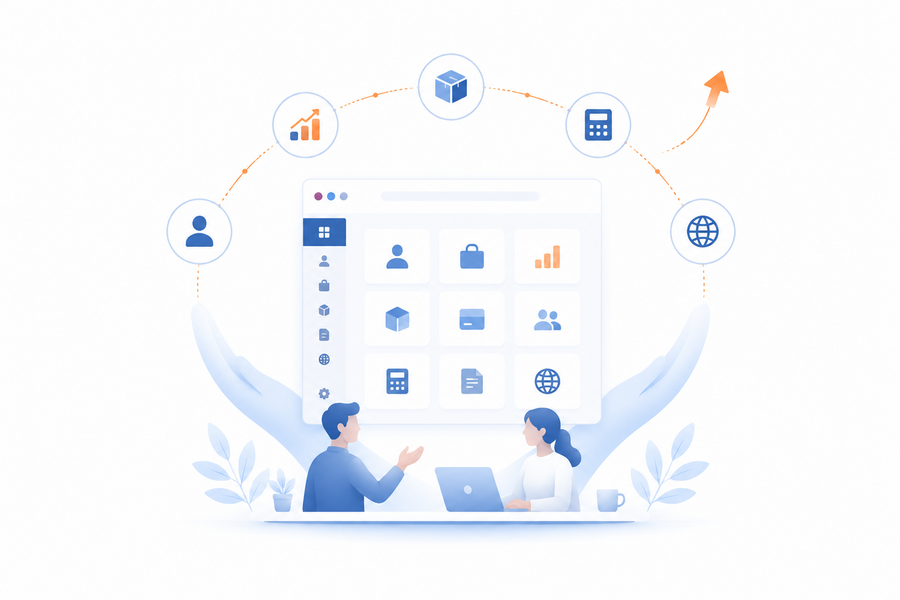
Early-stage startups test their business model, attract customers, and build internal processes simultaneously. Information often sits in spreadsheets, messages, and separate services. Odoo organizes customers, sales, tasks, documents, and other operations in connected apps.
With limited resources, defining the initial scope is especially important. APKO reviews processes and priorities, identifying what standard Odoo handles, what needs configuration, and what requires integration or development.
Depending on the starting point, a project may include data preparation and migration, app configuration, key scenario testing, and user training. After launch, support and development follow actual business needs rather than hypothetical requirements far in the future.
A phased Odoo launch for startups
The first stage defines the minimum processes needed for daily work, such as customer management, sales, projects, invoicing, or inventory, depending on the startup's model.
Even a new company may have customer lists, products, documents, and spreadsheet or service data. Before launch, we identify what to migrate to Odoo, check its quality, and agree on ongoing data management rules.
Standard Odoo apps and settings form the foundation. Development is used only when standard capabilities cannot meet an agreed requirement, keeping the architecture clear.
Before daily use begins, key scenarios are tested with responsible employees. Users train on their own workflows, and functionality expands after launch when needs are confirmed.
A clear workspace for a small team
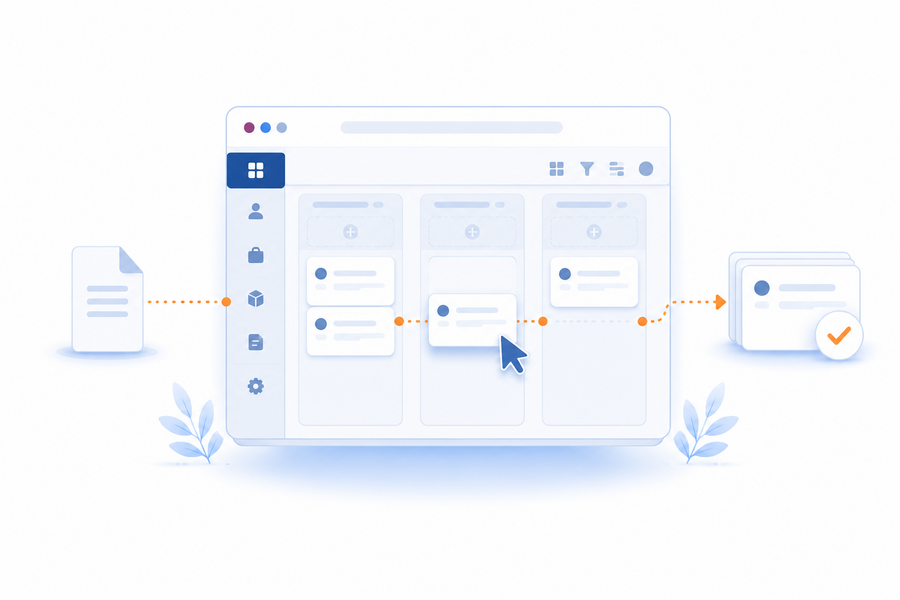
Odoo workspaces combine installed apps and permissions. Employees see relevant sections, documents, and actions, with connected customer, order, task, and invoice data that reduces movement between services.
A clear workspace for a small team
Odoo workspaces combine installed apps and permissions. Employees see relevant sections, documents, and actions, with connected customer, order, task, and invoice data that reduces movement between services.
Project management and resource planning
Odoo Project lets you create projects and tasks, organize them into stages, assign team members, and set deadlines. Planning handles scheduling and resource allocation, while Timesheets records time spent. With the right configuration, project data can be linked to sales, expenses, and financial documents.
Organize processes without unnecessary complexity
Moving to Odoo reduces disconnected spreadsheets and manual data transfers. Each process has defined stages, owners, actions, and notifications.
Startup workflows evolve. Agree on and test changes before configuring them to avoid uncontrolled accumulation of fields, automations, and customizations.
Controlled automation costs
Before the project begins, we define how practical results will be assessed: fewer manual steps, faster request handling, fewer errors, or more current management information.
A phased approach automates priority processes first and adds functionality after validation. Actual financial results depend on scope, data quality, and consistent team adoption.
Configure Odoo for your startup's current needs
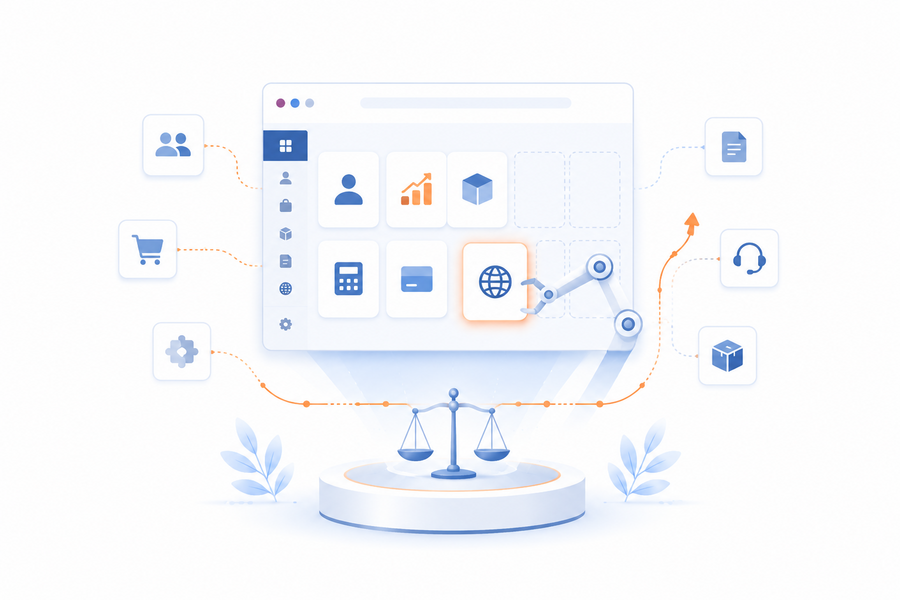
Scope follows actual processes and priorities. One startup may begin with CRM and projects; another may need sales, inventory, or invoicing. APKO maps requirements to Odoo and proposes configuration, integrations, or development only where needed.
Configure Odoo for your startup's current needs
Scope follows actual processes and priorities. One startup may begin with CRM and projects; another may need sales, inventory, or invoicing. APKO maps requirements to Odoo and proposes configuration, integrations, or development only where needed.
A flexible system for ongoing development
Odoo's modular structure lets you add apps, users, and business areas gradually. Development must account for existing processes, data structures, and integrations.
APKO manages changes from requirements analysis to verification of the finished solution. New functionality follows an agreed plan and is documented and tested before launch. This supports consistent development and keeps the system manageable as the business changes.