
For multinational companies
One platform to manage companies, branches, and departments across regions
Consistent processes for distributed businesses
- Finance, sales, purchasing, warehouses, and projects in one system
- Access controls by company, department, and employee role
- Multiple languages and currencies in one workspace
- Corporate system integration and phased regional rollout
In multinationals, processes span legal entities, branches, and regional teams. Each unit may have its own working practices, approval routes, and reporting requirements. Odoo connects these processes in one system for consistent handling of corporate data.
APKO begins by reviewing your company's existing IT architecture and business processes. We identify which operations should be standardized across the enterprise and which need to reflect regional and departmental differences. This forms the target model for the future system.
After model approval, the team configures Odoo apps, user roles, access levels, reference data, and workflows. Scope may also include migration, corporate integrations, key scenario testing, and user preparation.
Implementation can be phased across companies, departments, and business areas. After launch, APKO supports the system, helps resolve issues, and develops functionality as business needs change.
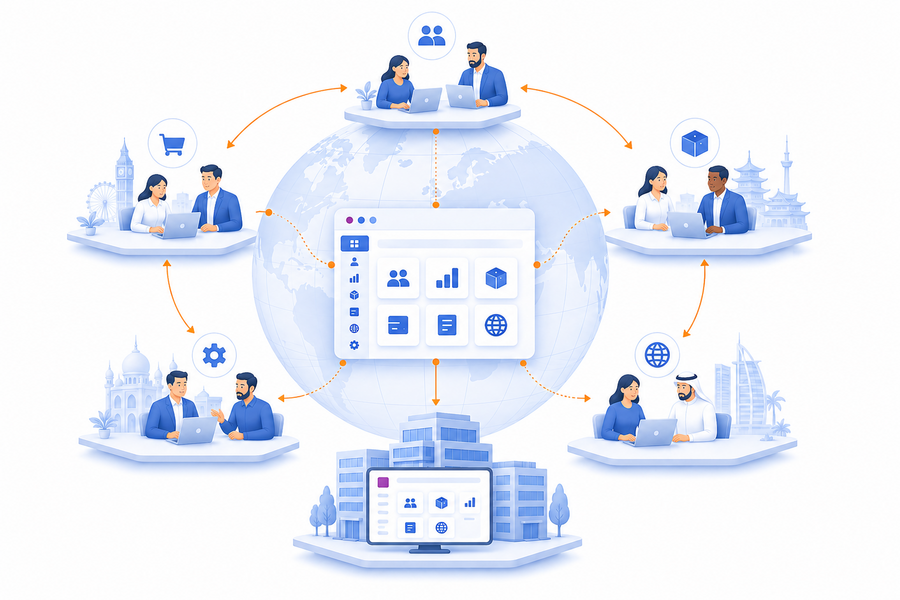
In multinationals, processes span legal entities, branches, and regional teams. Each unit may have its own working practices, approval routes, and reporting requirements. Odoo connects these processes in one system for consistent handling of corporate data.
APKO begins by reviewing your company's existing IT architecture and business processes. We identify which operations should be standardized across the enterprise and which need to reflect regional and departmental differences. This forms the target model for the future system.
After model approval, the team configures Odoo apps, user roles, access levels, reference data, and workflows. Scope may also include migration, corporate integrations, key scenario testing, and user preparation.
Implementation can be phased across companies, departments, and business areas. After launch, APKO supports the system, helps resolve issues, and develops functionality as business needs change.
Odoo benefits for distributed companies
Odoo benefits for distributed companies
- Unified architecture: core processes and data are brought together in a shared information environment.
- Multi-company management: legal entities and departments work in a coordinated system.
- Local requirements: workflows are configured to reflect regional requirements.
- Shared reference data: consistent data management rules reduce discrepancies and duplicate entry.
- Controlled rollout: companies and functional areas are onboarded according to an agreed plan.
- Project and resource management: tasks, deadlines, assignees, and workloads are available in one environment.
- Scalability: new departments and business areas can be added to the system.
- Enterprise integrations: Odoo connects to existing services and data sources.
- Management transparency: managers receive consistent information for monitoring and analysis.
- Support and development: system functionality expands as new requirements arise.
Phased Odoo implementation across a distributed company
Rollout can proceed sequentially by company, region, or functional area. This simplifies user training, reduces pressure on teams, and allows feedback to inform subsequent deployments.
Phased Odoo implementation across a distributed company
Rollout can proceed sequentially by company, region, or functional area. This simplifies user training, reduces pressure on teams, and allows feedback to inform subsequent deployments.
A clear interface for employees across departments
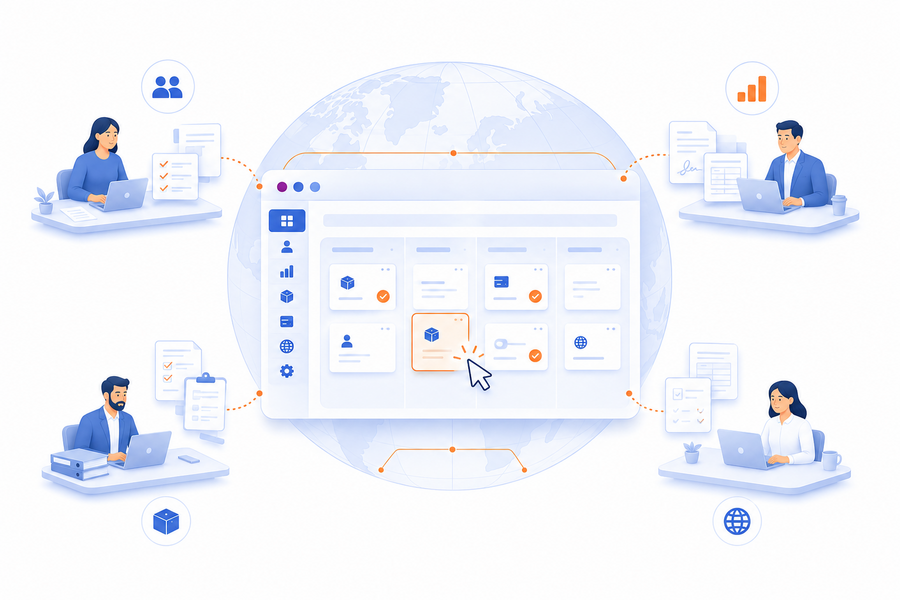
Odoo workspaces match roles and responsibilities. Employees see the apps, documents, and actions they need, while consistent forms and statuses simplify collaboration across companies and regions. Multiple interface languages are available.
A clear interface for employees across departments
Odoo workspaces match roles and responsibilities. Employees see the apps, documents, and actions they need, while consistent forms and statuses simplify collaboration across companies and regions. Multiple interface languages are available.
Project and resource management across a distributed organization
Project and resource management across a distributed organization
APKO configures project management to match the customer's organizational structure. Projects can be linked to sales, timesheets, expenses, and financial documents, enabling managers to assess delivery using connected data.
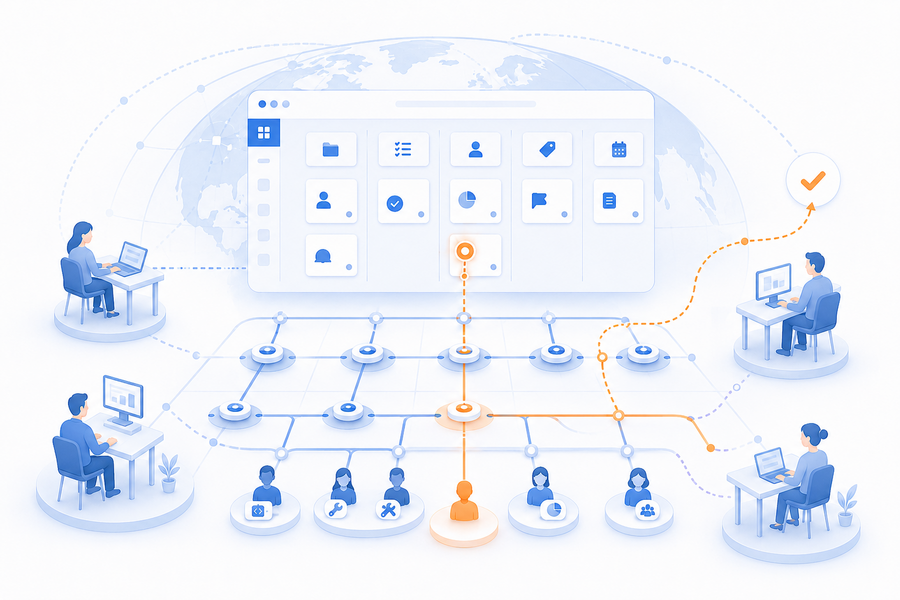
APKO configures project management to match the customer's organizational structure. Projects can be linked to sales, timesheets, expenses, and financial documents, enabling managers to assess delivery using connected data.
Optimize processes across a distributed company
APKO analyzes existing processes and identifies operations to standardize, automate, or integrate with other systems. The result is a clearer architecture in which everyone understands responsibilities, workflows, and data sources.
The financial value of a unified architecture
Implementation success should be measured against actual company metrics: process duration, error rates, reporting speed, and resource utilization. Phased Odoo development directs investment toward priority needs and expands the system once each stage has demonstrated practical value.