NETWORK SECURITY
Protect corporate networks and remote access with next-generation firewalls, secure application access, segmentation, and device access control.
NETWORK SECURITY
Protect corporate networks and remote access with next-generation firewalls, secure application access, segmentation, and device access control.
Key benefits
We build a secure network architecture for offices, branches, remote employees, and cloud services, with unified policies, device controls, and Zero Trust access.
Standards-based design
The network security architecture is based on ISO/IEC 27033-1:2015, CIS Controls v8.1, and the Zero Trust model (NIST SP 800-207).
The perimeter has disappeared
Security is designed for hybrid work, bringing offices, branches, remote employees, and cloud services under one policy.
Segmentation as a core requirement
Network segmentation limits the spread of an attack while protecting network entry points.

Network admission control
Every device must pass a policy compliance check before gaining access.
Application-level access
ZTNA replaces traditional VPNs, reducing the attack surface.

Manageability and transparency
Unified policies and logs replace disconnected settings on individual devices.
Key benefits
We build a secure network architecture for offices, branches, remote employees, and cloud services, with unified policies, device controls, and Zero Trust access.
Standards-based design
The network security architecture is based on ISO/IEC 27033-1:2015, CIS Controls v8.1, and the Zero Trust model (NIST SP 800-207).
The perimeter has disappeared
Security is designed for hybrid work, bringing offices, branches, remote employees, and cloud services under one policy.
Segmentation as a core requirement
Network segmentation limits the spread of an attack while protecting network entry points.
Network admission control
Every device must pass a policy compliance check before gaining access.
Application-level access
ZTNA replaces traditional VPNs, reducing the attack surface.
Manageability and transparency
Unified policies and logs replace disconnected settings on individual devices.
Key network security capabilities
Security tools are selected according to network topology and access methods: local sites, branches, remote employees, contractors, and cloud services.
- Next-generation firewalls (NGFW): Application control, traffic filtering, and intrusion prevention.
- Secure branch access (Secure SD-WAN and SASE): Networking and security combined in one solution.
- Zero Trust Network Access (ZTNA): Context-aware access to specific applications for employees and contractors.
- Segmentation and microsegmentation: Isolate critical systems, IoT, and industrial segments.
- Network access control (NAC): Device identification, profiling, and policy-based admission.

Key network security capabilities
Security tools are selected according to network topology and access methods: local sites, branches, remote employees, contractors, and cloud services.
- Next-generation firewalls (NGFW): Application control, traffic filtering, and intrusion prevention.
- Secure branch access (Secure SD-WAN and SASE): Networking and security combined in one solution.
- Zero Trust Network Access (ZTNA): Context-aware access to specific applications for employees and contractors.
- Segmentation and microsegmentation: Isolate critical systems, IoT, and industrial segments.
- Network access control (NAC): Device identification, profiling, and policy-based admission.

Network security architecture
We design network security as a unified architecture with clear zones, controlled entry points, and rules for communication between segments.
- Topology analysis: We review the current network structure, traffic routes, and connections for branches, cloud services, and remote users.
- Entry points: We identify external interfaces, VPN gateways, wireless networks, contractor connections, and other potential attack paths.
- Zones and rules: We separate office, server, guest, cloud, IoT, and industrial segments and define permitted traffic between them.
- Secure implementation: We migrate services and apply new policies in stages, keeping critical systems available.
- Acceptance tests: We verify connectivity, traffic filtering, failover, and security rule accuracy.
- Documentation: We hand over up-to-date diagrams, policy lists, operating instructions, and change procedures.
Network security architecture
We design network security as a unified architecture with clear zones, controlled entry points, and rules for communication between segments.
- Topology analysis: We review the current network structure, traffic routes, and connections for branches, cloud services, and remote users.
- Entry points: We identify external interfaces, VPN gateways, wireless networks, contractor connections, and other potential attack paths.
- Zones and rules: We separate office, server, guest, cloud, IoT, and industrial segments and define permitted traffic between them.
- Secure implementation: We migrate services and apply new policies in stages, keeping critical systems available.
- Acceptance tests: We verify connectivity, traffic filtering, failover, and security rule accuracy.
- Documentation: We hand over up-to-date diagrams, policy lists, operating instructions, and change procedures.
From VPN to Zero Trust access
We replace broad internal network access with targeted access to specific applications after verifying the user, device, and request context.
- Application access: Users connect only to authorized services without visibility into the entire corporate network.
- Identity verification: Before access is granted, the user's identity, assigned role, and additional authentication factor are verified.
- Device health: Device type, installed protection, update status, and corporate policy compliance are taken into account.
- Connection context: The decision depends on location, time, risk level, and other parameters of the individual request.
- Separate policies: Employees, external contractors, and service accounts receive different permission sets.
- Least privilege: Access is granted only for the time and resources needed to complete a task.

From VPN to Zero Trust access
We replace broad internal network access with targeted access to specific applications after verifying the user, device, and request context.
- Application access: Users connect only to authorized services without visibility into the entire corporate network.
- Identity verification: Before access is granted, the user's identity, assigned role, and additional authentication factor are verified.
- Device health: Device type, installed protection, update status, and corporate policy compliance are taken into account.
- Connection context: The decision depends on location, time, risk level, and other parameters of the individual request.
- Separate policies: Employees, external contractors, and service accounts receive different permission sets.
- Least privilege: Access is granted only for the time and resources needed to complete a task.
The value of partnership
We design and implement network security alongside the network itself, with one team and one project, eliminating gaps between networking and security infrastructure.
The value of partnership
We design and implement network security alongside the network itself, with one team and one project, eliminating gaps between networking and security infrastructure.

Related services
Network security works best alongside access management, network infrastructure development, and threat detection, creating a unified security framework.

Identity and access management
We centralize user and permission management and implement MFA and role-based access to reduce unauthorized access risks and update or revoke rights promptly.
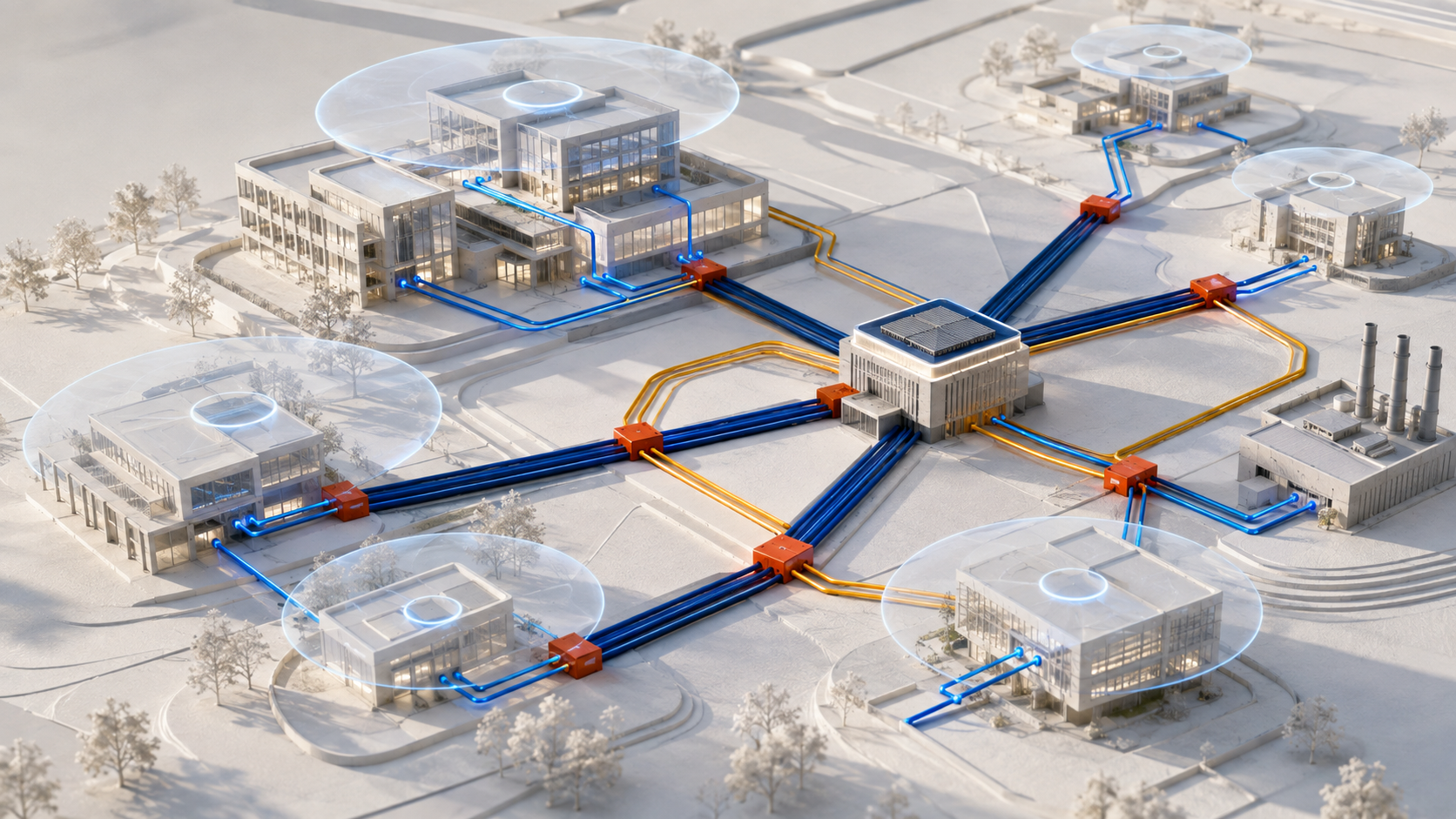
NETWORKS AND WIRELESS
We design and develop reliable networks for offices, branches, and production sites, with stable, manageable connections for users, devices, and business systems.

Threat management and response
We identify and prioritize threats, contain incidents, and coordinate remediation to reduce response times and limit cyberattack impact.
Want to learn more about this service?
We assess network security and propose an improvement plan
Related services
Network security works best alongside access management, network infrastructure development, and threat detection, creating a unified security framework.
Identity and access management
We centralize user and permission management and implement MFA and role-based access to reduce unauthorized access risks and update or revoke rights promptly.
NETWORKS AND WIRELESS
We design and develop reliable networks for offices, branches, and production sites, with stable, manageable connections for users, devices, and business systems.
Threat management and response
We identify and prioritize threats, contain incidents, and coordinate remediation to reduce response times and limit cyberattack impact.
Want to learn more about this service?
We assess network security and propose an improvement plan