
Process audit and Creatio architecture
We design the system before configuration begins: address process limitations, document the target model, and establish architecture that scales without rebuilding the core.
Process audit and Creatio architecture
We design the system before configuration begins: address process limitations, document the target model, and establish architecture that scales without rebuilding the core.
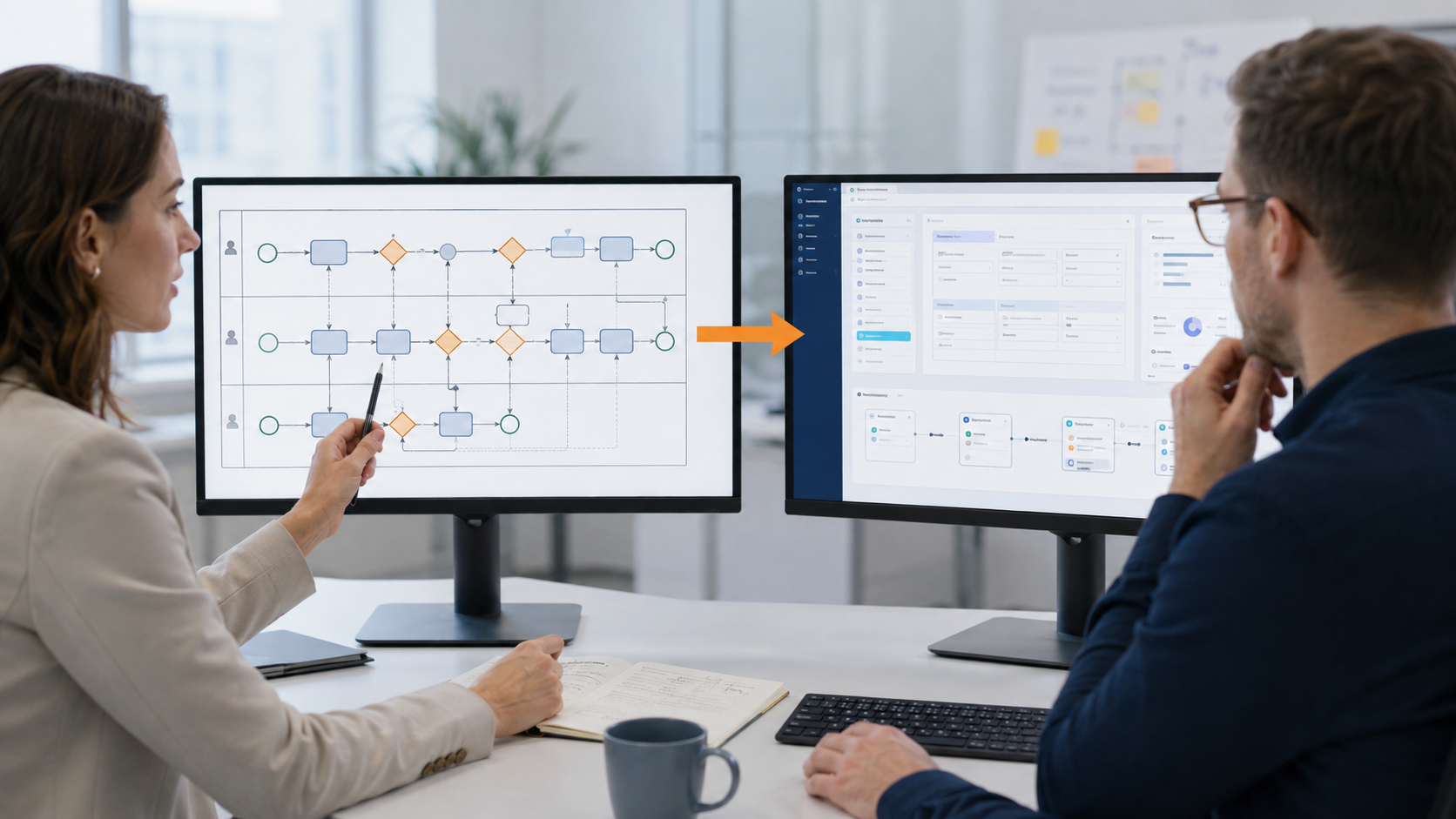
Design the process, then configure the system
Automation alone cannot fix an inefficient process. Moving an existing workflow into Creatio without prior analysis preserves unnecessary approvals, duplicate operations, and unclear responsibilities.
The project therefore starts with a review of the operating model, user roles, data, and decision points. Based on the audit, we define TO-BE processes, automation requirements, and the architectural model for the future solution.
Six areas that determine implementation success
We assess processes, data, and architecture together to establish an agreed Creatio model, an organized backlog, and a realistic implementation plan before configuration begins.

Business processes
Workflows, roles, approvals, target timelines, exceptions, manual operations, and control points
Data
Data sources, reference data, duplicates, relationships between objects, and responsibility for information quality.

Integrations
Creatio integrations with ERP systems, enterprise service buses, websites, telephony, email, and existing information systems

User roles
Workspaces, permissions, approval workflows, and areas of responsibility.

Architecture
Solution components, packages, environments, and security and scalability requirements.

Implementation risks
Technical debt, infrastructure constraints, dependencies, and users' readiness for change.
Six areas that determine implementation success
We assess processes, data, and architecture together to establish an agreed Creatio model, a transparent backlog, and a realistic implementation plan before configuration begins.
Business processes
Workflows, roles, approvals, target timelines, exceptions, manual operations, and control points
Data
Data sources, reference data, duplicates, relationships between objects, and responsibility for information quality.
Integrations
Creatio integrations with ERP systems, enterprise service buses, websites, telephony, email, and existing information systems
User roles
Workspaces, permissions, approval workflows, and areas of responsibility.
Architecture
Solution components, packages, environments, and security and scalability requirements.
Implementation risks
Technical debt, infrastructure constraints, dependencies, and users' readiness for change.
Consulting & BPM Audit
We interview process owners and key users and review procedures, metrics, and problem scenarios. We document the AS-IS model and design TO-BE processes using BPMN 2.0.
For each process, we define roles, events, control points, exceptions, SLAs, and automation requirements. The result provides a shared foundation for the backlog, prototype, and system acceptance criteria.

BPM consulting and audit
We interview process owners and key users and review procedures, metrics, and problem scenarios. We document the AS-IS model and design TO-BE processes using BPMN 2.0.
For each process, we define roles, events, control points, exceptions, SLAs, and automation requirements. The result provides a shared foundation for the backlog, prototype, and system acceptance criteria.
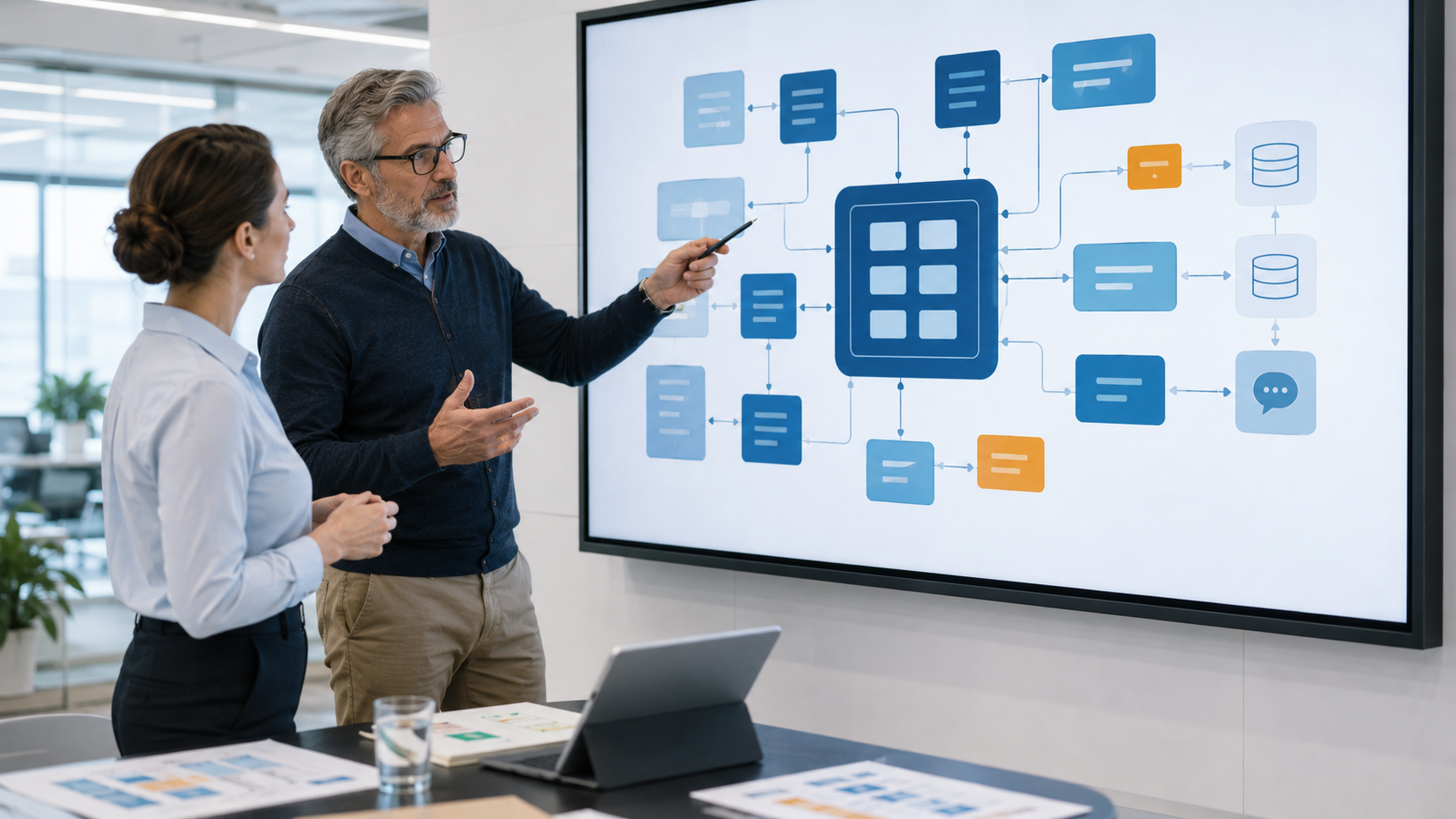
Composable architecture without unnecessary technical debt
The solution is designed using independent packaged business capabilities in Creatio. Each component handles a specific process or functional area.
This approach enables phased delivery, reuse of existing components across departments, and upgrades without changing the platform core. The system grows with the business without making each subsequent change more expensive.
A flexible modular architecture without accumulating technical debt
The solution is designed using independent packaged business capabilities in Creatio. Each component handles a specific process or functional area.
This approach enables phased delivery, reuse of existing components across departments, and upgrades without changing the platform core. The system grows with the business without making each subsequent change more expensive.
From business goals to agreed architecture and an implementation roadmap
The project follows a clear path from analyzing current processes to handing over the agreed model for implementation. At each stage, we document results, agree on decisions with key stakeholders, and prepare materials for Creatio configuration.

Handover for implementation
We agree on the plan and hand the model over to the configuration team.

Prioritization
We define tasks, implementation priorities, and acceptance criteria

Architecture
We define Creatio components, integrations, roles, and environments.

Modeling
We document current processes and design the target model

Diagnostics
We review processes, systems, data, and user expectations.
From business goals to agreed architecture and an implementation roadmap
The project follows a clear path from analyzing current processes to handing over the agreed model for implementation. At each stage, we document results, agree on decisions with key stakeholders, and prepare materials for Creatio configuration.
Handover for implementation
We agree on the plan and hand the model over to the configuration team.
Prioritization
We define tasks, implementation priorities, and acceptance criteria
Architecture
We define Creatio components, integrations, roles, and environments.
Modeling
We document current processes and design the target model.
Diagnostics
We review processes, systems, data, and user expectations.
Value for business and IT
The audit turns a broad vision of the future system into an agreed, manageable implementation plan.
- A shared vision of the future system for business and IT.
- Lower risk of costly rework.
- Clear scope and release sequence.
- Architecture ready for growth and scaling.

Audit and design deliverables
After the audit, the customer receives an agreed set of deliverables to support decisions, project estimation, and the transition to Creatio implementation.
Project documentation package
Agreed diagrams of current and target workflows, including roles, events, branches, control points, and exceptions.
A list of requirements grouped by process and user role, with priorities and acceptance criteria.
Solution components, integrations, environments, roles, data, and each system's responsibilities.
Source systems, data objects, synchronization directions, and error handling rules.
Access rights, mandatory approvals, restrictions, and user responsibilities.
The sequence of stages, dependencies, risks, and a basis for estimating the scope of work.
Value for business and IT
The audit turns a broad vision of the future system into an agreed, manageable implementation plan.
- A shared vision of the future system for business and IT.
- Lower risk of costly rework.
- Clear scope and release sequence.
- Architecture ready for growth and scaling.
Audit and design deliverables
After the audit, the customer receives an agreed set of deliverables to support decisions, project estimation, and the transition to Creatio implementation.
Project documentation package
Agreed diagrams of current and target workflows, including roles, events, branches, control points, and exceptions.
A list of requirements grouped by process and user role, with priorities and acceptance criteria.
Solution components, integrations, environments, roles, data, and each system's responsibilities.
Source systems, data objects, synchronization directions, and error handling rules.
Access rights, mandatory approvals, restrictions, and user responsibilities.
The sequence of stages, dependencies, risks, and a basis for estimating the scope of work.