
For eCommerce
Online store, sales, inventory, delivery, and finance in one system.
Odoo connects storefront, catalog, order, inventory, payment, delivery, and financial document management. Data flows between apps without repeated manual entry.
The company gains one process from ordering to shipping, payment, returns, and performance analysis.
Why companies choose Odoo for eCommerce
Odoo connects sales, warehouse operations, delivery, and financial documents. Employees share data, while managers receive current information on orders and trading performance.
A unified order-to-cash process
Online store orders flow into Sales, Inventory, and financial apps, reducing manual work and keeping fulfillment visible at every stage.
Real-time stock levels
Online product availability can be calculated from warehouse data, reducing the risk of selling unavailable goods and canceling orders later.
Less manual data transfer
Product records, orders, customers, deliveries, invoices, and payments are stored in connected apps. Employees do not need to move the same information repeatedly between separate systems.
Connecting sales and finance
Orders can support invoicing and payment registration. The completeness of financial accounting depends on installed apps and configured workflows.
Multichannel operations
Odoo can be configured for multiple websites, warehouses, companies, languages, and currencies. The structure depends on markets, legal entities, and access rules.
Data for better management
Reports analyze sales, stock, movements, and other metrics. Available analytics depends on installed apps and data quality.
Which eCommerce models Odoo supports
Odoo supports retail, wholesale, owned websites, and hybrid models. Marketplaces and external commerce platforms may require separate connectors or integrations.
Which eCommerce models Odoo supports
Odoo supports retail, wholesale, owned websites, and hybrid models. Marketplaces and external commerce platforms may require separate connectors or integrations.
- End-to-end process: online orders flow through sales, inventory, delivery, and financial documents.
- Real-time stock levels: product availability is determined from inventory data.
- Sales analysis: assess performance by product, category, channel, and period.
- Tailored terms: configure price lists, discounts, taxes, and payment terms for individual customers.
- Controlled access: specific prices and quotations can be shown to authenticated users.
- Connected finance: confirmed orders support invoicing and payment tracking.
- A shared product database: retail and corporate customers use the same catalog and stock data.
- Different sales rules: each channel can have its own pricing, taxes, payment methods, and ordering conditions.
- Shared analytics: management receives consolidated information on retail and wholesale operations.
- Order exchange: orders from external marketplaces can be sent to Odoo through a suitable connector or API.
- Stock allocation: stock is allocated between your own store and marketplaces according to agreed rules.
- Commission tracking: marketplace commissions and shipping costs can be tracked with the appropriate configuration.
- Centralized data: websites and brands can share products, warehouses, and financial processes.
- Separate storefronts: each website can have its own structure, catalog, and sales rules.
- Consolidated reporting: analyze performance by brand, website, market, or company.
- Shared stock: The online store and physical locations can use the same inventory system.
- Flexible fulfillment options: Configure delivery, collection, and in-store pickup workflows.
- Unified customer history: orders and requests are stored in linked records.
- Recurring operations: the Subscriptions app manages recurring charges and renewals.
- Revenue planning: active subscription data helps analyze future billings.
- Lifecycle management: subscription changes, renewals, and cancellations are recorded in one system.
Key Odoo features for eCommerce
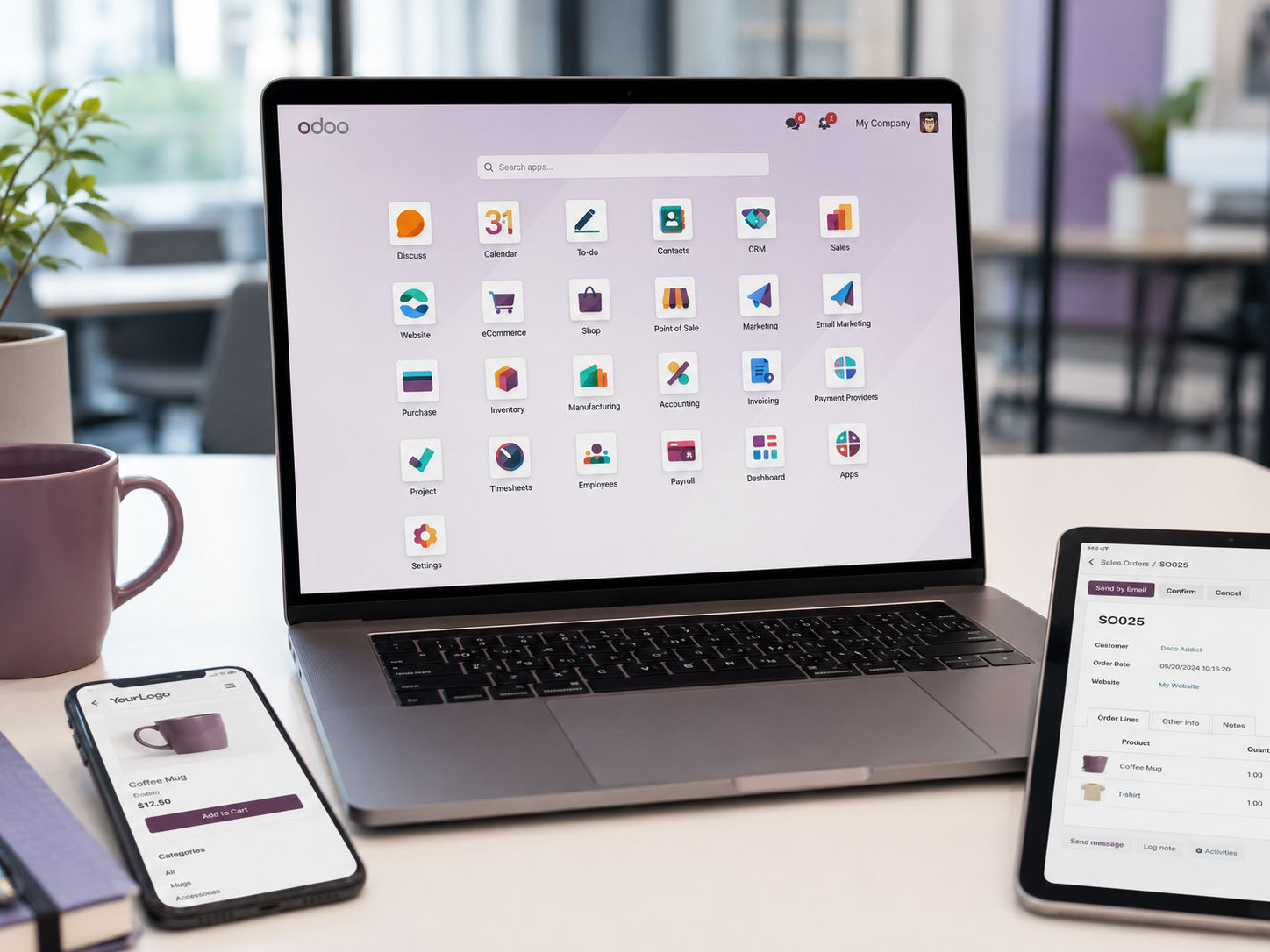
Key Odoo features and modules for eCommerce
Build, launch, and optimize your online store with Odoo
Odoo connects your storefront with the product catalog, sales, inventory operations, delivery, payments, and reporting.
Build, launch, and optimize your online store with Odoo
Odoo connects your storefront with the product catalog, sales, inventory operations, delivery, payments, and reporting.
Online store creation and catalog management
- Storefront management: Create store pages and tailor them to products, promotions, and audience needs.
- Catalog and variants: Manage products, categories, attributes, and variants within a shared structure.
- Multiple websites: Separate stores, brands, and markets while keeping data management centralized.
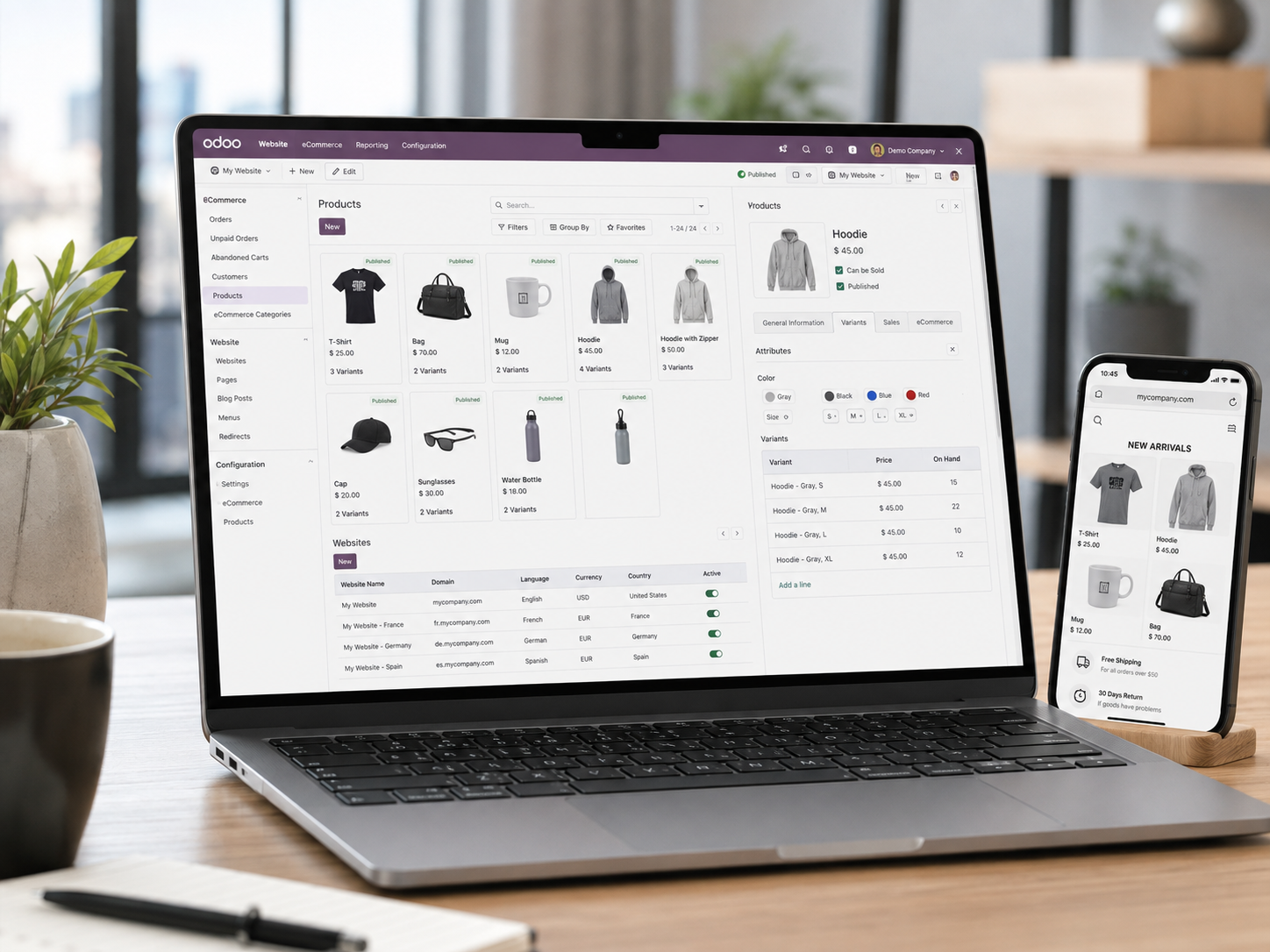
Online store creation and catalog management
- Storefront management: Create store pages and tailor them to products, promotions, and audience needs.
- Catalog and variants: Manage products, categories, attributes, and variants within a shared structure.
- Multiple websites: Separate stores, brands, and markets while keeping data management centralized.
Checkout and sales terms
- Order capture: Record online purchases as sales orders without repeated manual entry.
- Prices and terms: apply price lists, discounts, taxes, and payment terms for B2B and B2C customers.
- Upselling: Recommend accessory, optional, or alternative products.
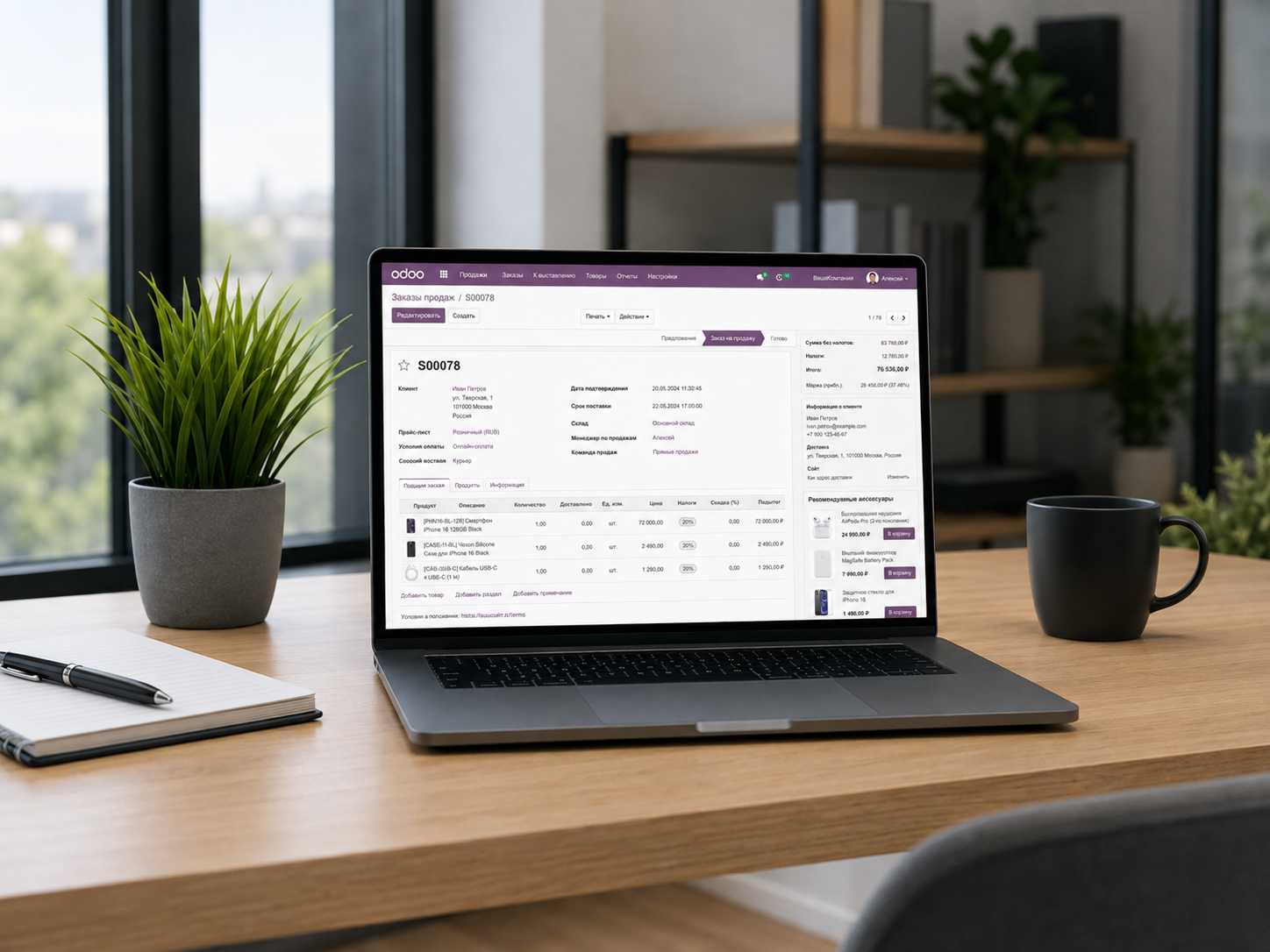
Checkout and sales terms
- Order capture: Record online purchases as sales orders without repeated manual entry.
- Prices and terms: apply price lists, discounts, taxes, and payment terms for B2B and B2C customers.
- Upselling: Recommend accessory, optional, or alternative products.
Stock reservation and allocation
- Product availability: Display availability based on actual inventory data.
- Reservation: Reserve goods after order confirmation according to configured rules.
- Multiple warehouses: Route orders to the right warehouse based on availability and fulfillment rules.
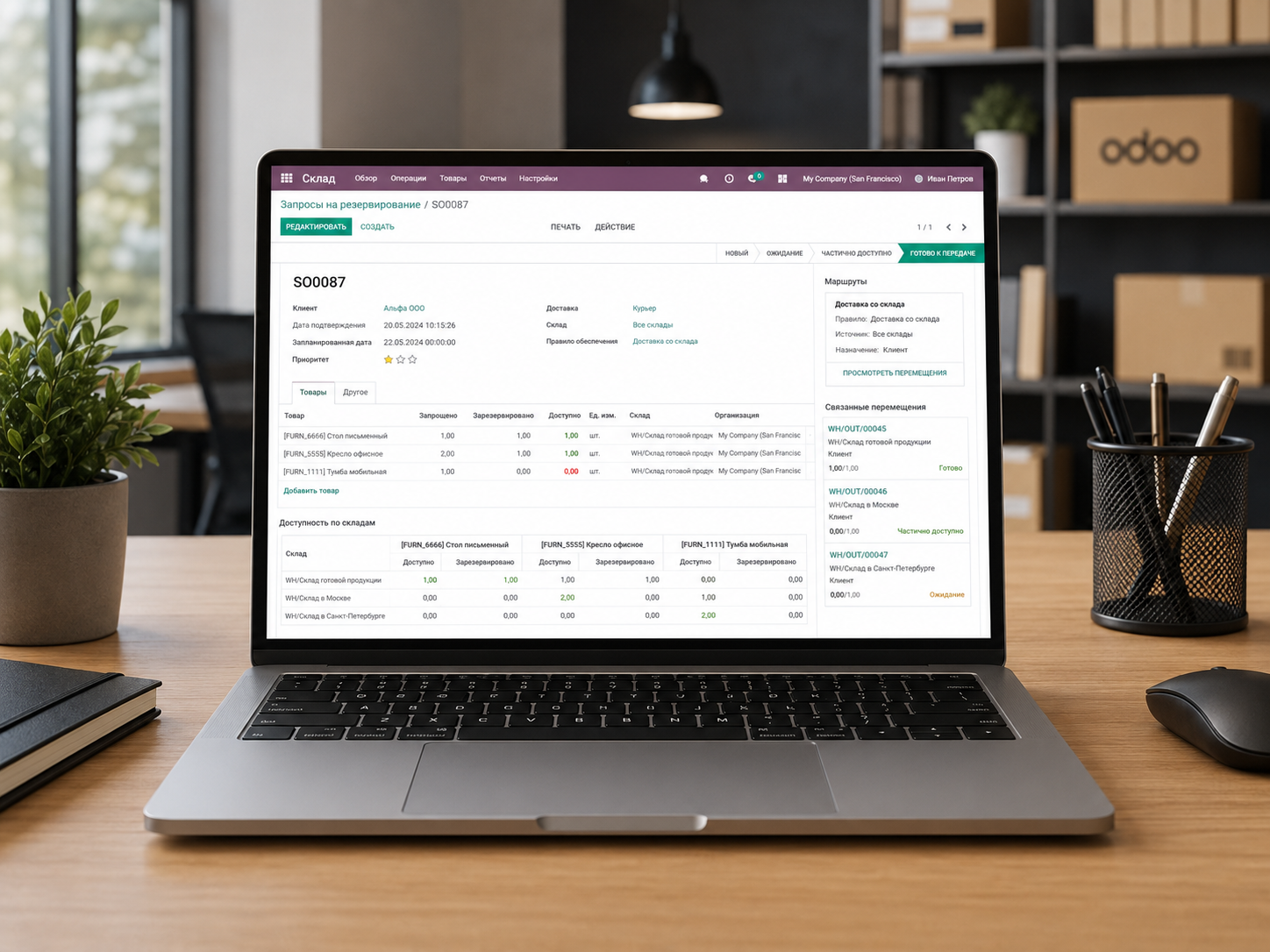
Stock reservation and allocation
- Product availability: Display availability based on actual inventory data.
- Reservation: Reserve goods after order confirmation according to configured rules.
- Multiple warehouses: Route orders to the right warehouse based on availability and fulfillment rules.
Picking, shipping, and delivery
- Warehouse operations: Organize order picking, packing, and shipping.
- Delivery methods: Connect suitable delivery services and shipping rate rules.
- Customer updates: Share order and delivery information through the available channels and customer portal.
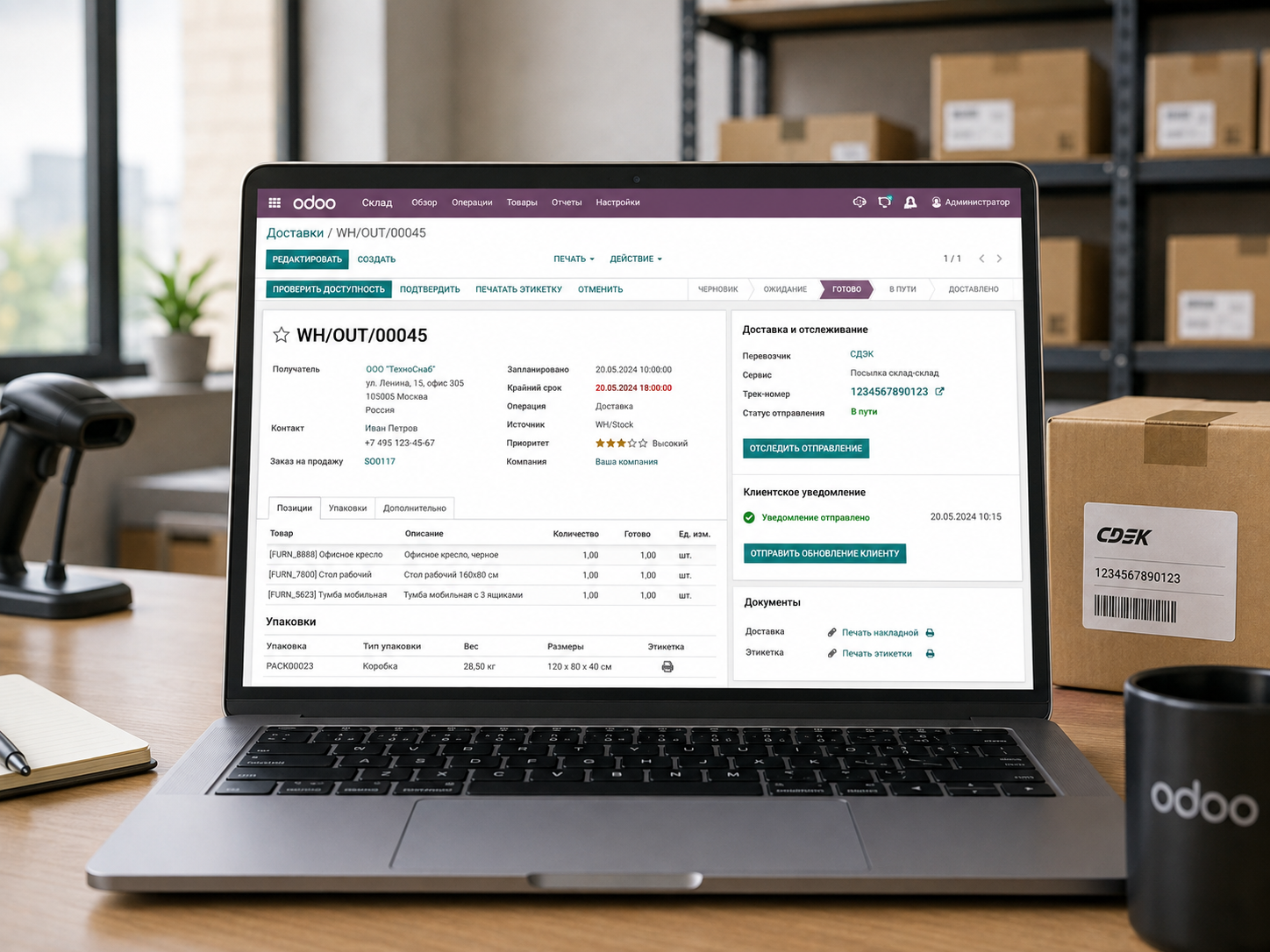
Picking, shipping, and delivery
- Warehouse operations: Organize order picking, packing, and shipping.
- Delivery methods: Connect suitable delivery services and shipping rate rules.
- Customer updates: Share order and delivery information through the available channels and customer portal.
Invoicing and payment tracking
- Invoice generation: Create invoices based on ordered, shipped, or delivered quantities according to your billing policy.
- Payment methods: Connect supported payment providers and monitor payment status.
- Payment reconciliation: Match incoming payments to invoices with financial accounting configured.
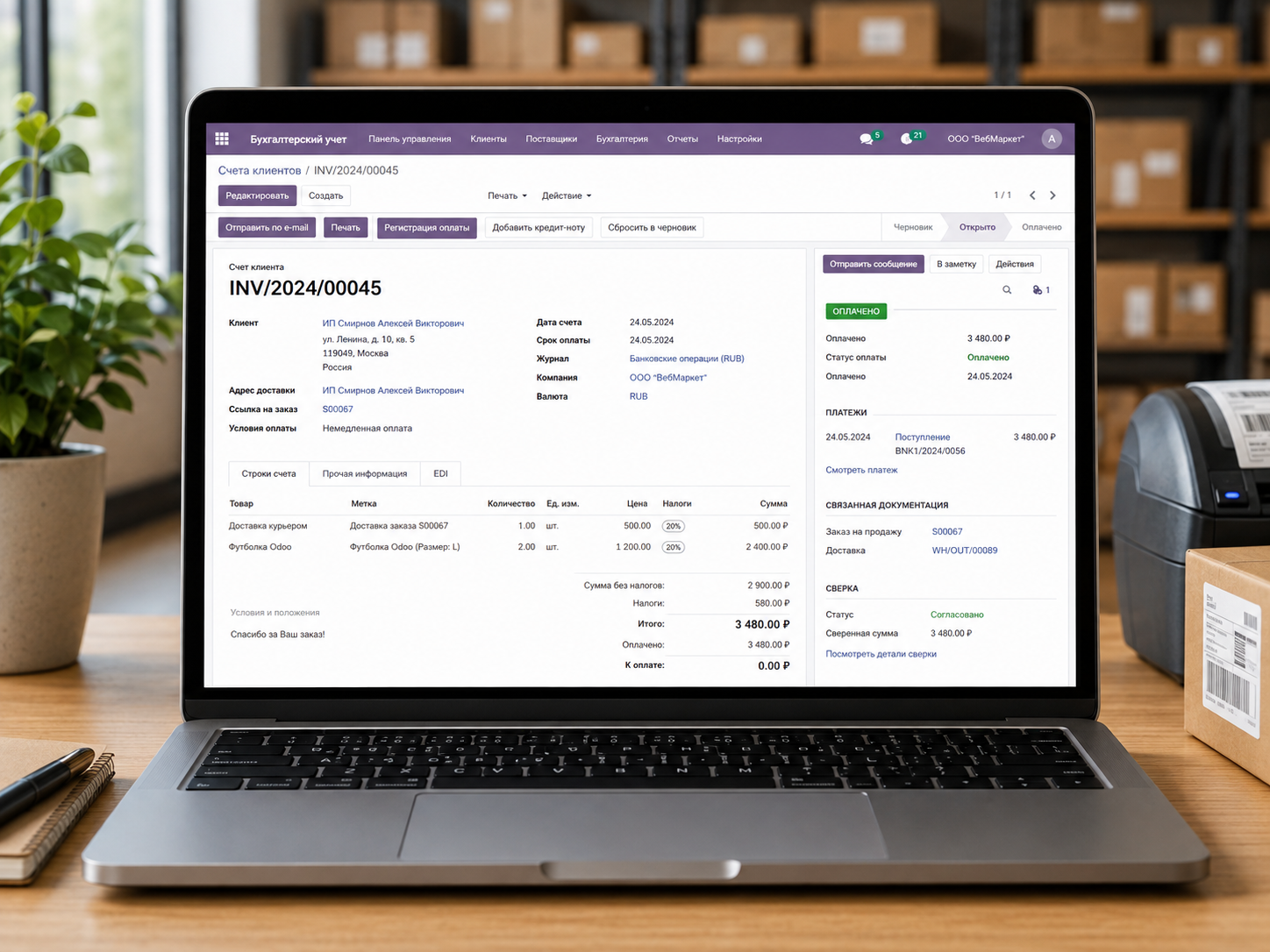
Invoicing and payment tracking
- Invoice generation: Create invoices based on ordered, shipped, or delivered quantities according to your billing policy.
- Payment methods: Connect supported payment providers and monitor payment status.
- Payment reconciliation: Match incoming payments to invoices with financial accounting configured.
Returns and exceptions
- Returns and refunds: Link product returns and refunds to the original sale.
- Partial deliveries: Handle backorders, rescheduling, and orders split into multiple shipments.
- Order history: Give support staff access to order, delivery, payment, and return details.
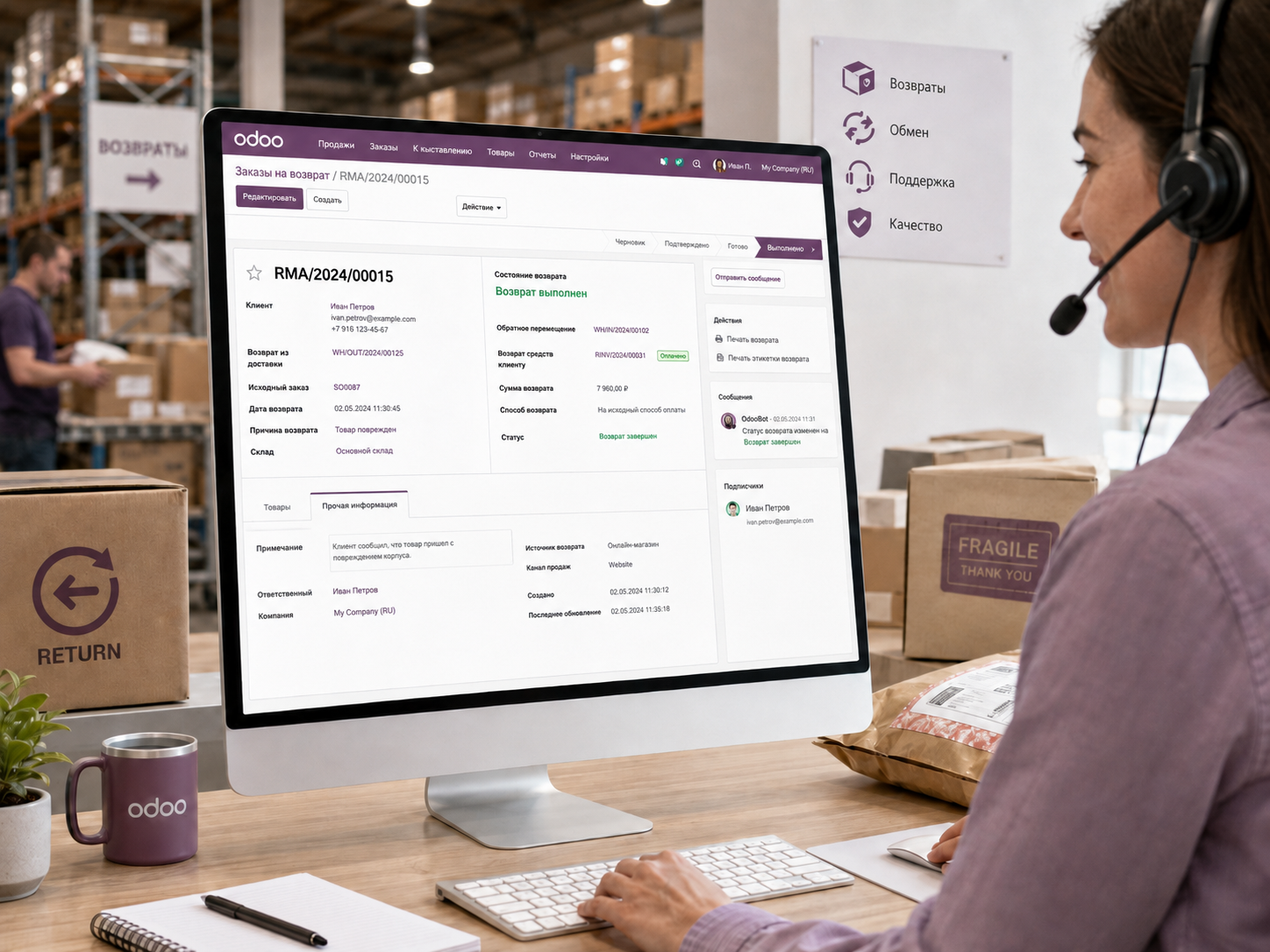
Returns and exceptions
- Returns and refunds: Link product returns and refunds to the original sale.
- Partial deliveries: Handle backorders, rescheduling, and orders split into multiple shipments.
- Order history: Give support staff access to order, delivery, payment, and return details.
Sales and profitability analytics
- Margins: Analyze performance by product, customer, or channel with cost accounting configured.
- Inventory health: Identify shortages, excess stock, and slow-moving products.
- Management reports: Combine key sales, inventory, and finance metrics in clear reports.
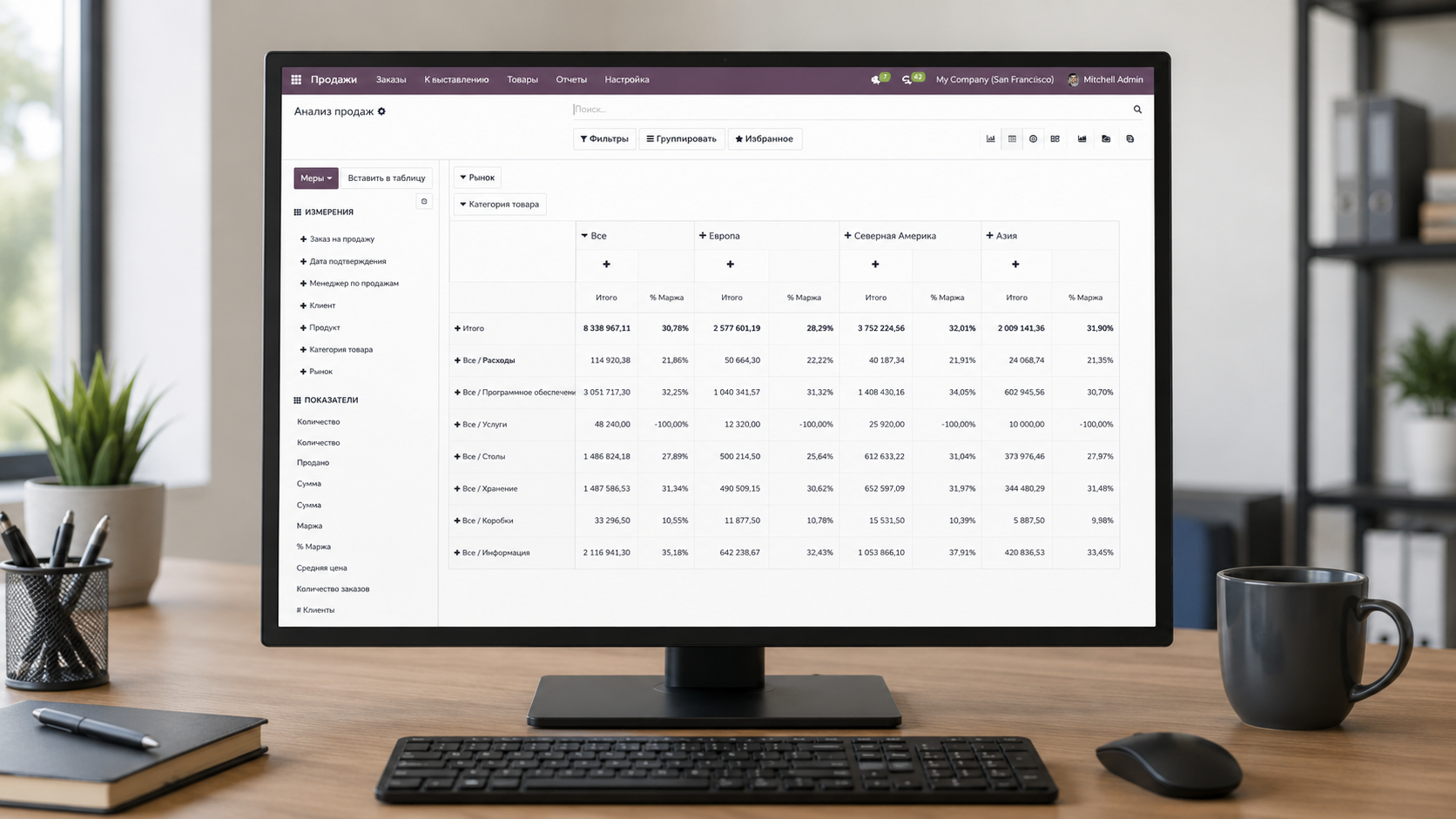
Sales and profitability analytics
- Margins: Analyze performance by product, customer, or channel with cost accounting configured.
- Inventory health: Identify shortages, excess stock, and slow-moving products.
- Management reports: Combine key sales, inventory, and finance metrics in clear reports.
Odoo integration with external services
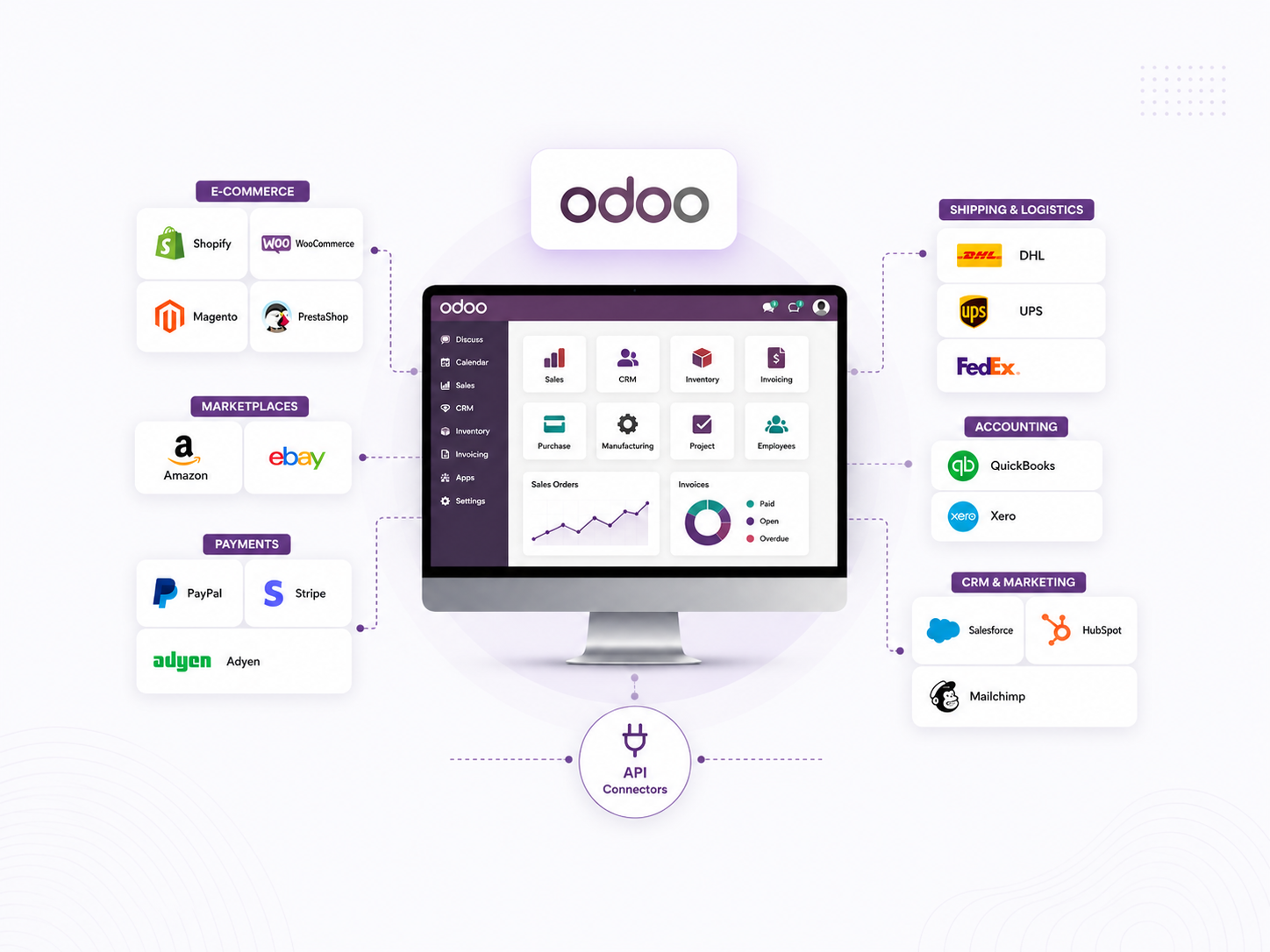
Odoo can connect to external systems through standard features, partner connectors, or APIs. Ready-made integrations, their scope, and limitations must be checked for the specific Odoo version, country, and selected solution.
- eCommerce platforms: Shopify, WooCommerce, Magento, PrestaShop, and other systems connect through dedicated connectors or integrations.
- Marketplaces: Data exchange with Amazon, eBay, Walmart, Zalando, and other marketplaces may require a partner module or custom development.
- Payment systems: Use providers supported by your Odoo version and available in your region.
- Delivery services: Carriers and aggregators connect through supported modules, partner solutions, or APIs.
- Accounting systems: Data exchange with QuickBooks, Xero, and other solutions is configured separately.
- CRM and marketing: Salesforce, HubSpot, Mailchimp, and other services can be connected when a suitable data exchange scenario is available.
- Other systems: Integration feasibility depends on API availability, documentation quality, and data exchange requirements.
Odoo integration with external services
Odoo can connect to external systems through standard features, partner connectors, or APIs. Ready-made integrations, their scope, and limitations must be checked for the specific Odoo version, country, and selected solution.
- eCommerce platforms: Shopify, WooCommerce, Magento, PrestaShop, and other systems connect through dedicated connectors or integrations.
- Marketplaces: Data exchange with Amazon, eBay, Walmart, Zalando, and other marketplaces may require a partner module or custom development.
- Payment systems: Use providers supported by your Odoo version and available in your region.
- Delivery services: Carriers and aggregators connect through supported modules, partner solutions, or APIs.
- Accounting systems: Data exchange with QuickBooks, Xero, and other solutions is configured separately.
- CRM and marketing: Salesforce, HubSpot, Mailchimp, and other services can be connected when a suitable data exchange scenario is available.
- Other systems: Integration feasibility depends on API availability, documentation quality, and data exchange requirements.
Extend Odoo as your business grows
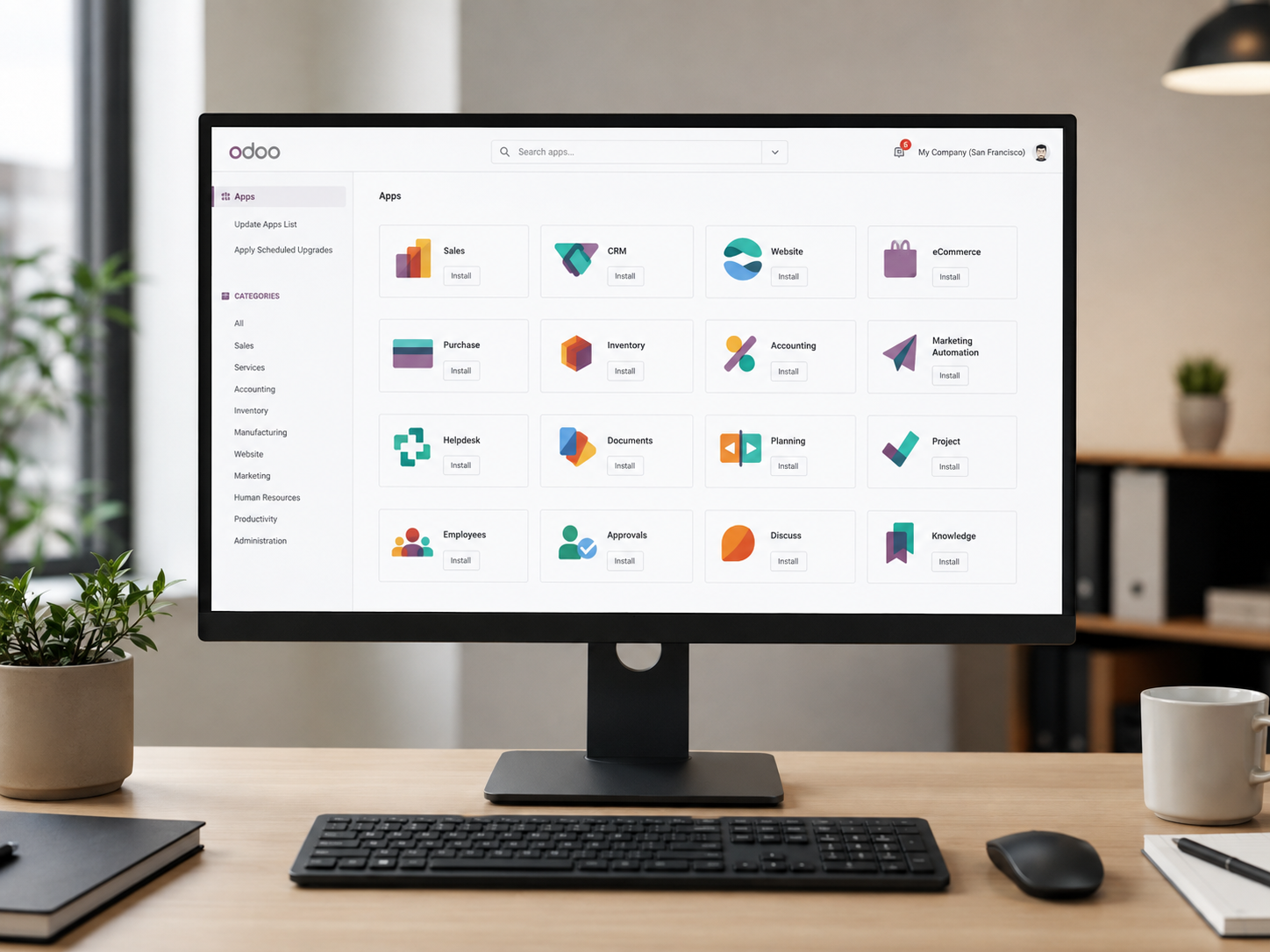
Odoo's modular structure lets you start with eCommerce, Sales, and Inventory, then add purchasing, marketing, customer support, and more. New apps should account for existing processes, permissions, data structures, and integrations, supporting orderly growth without unnecessary customizations.
Additional eCommerce apps
- Purchasing: Manage vendors, purchasing, and replenishment.
- Planning: Demand forecasts, inventory, and production capacity planning help reduce shortages and overstock.
- Marketing Automation: Campaigns, audience segmentation, and marketing workflows.
- Helpdesk: Handle customer questions, delivery issues, and returns
Additional eCommerce apps
- Purchasing: Manage vendors, purchasing, and replenishment.
- Planning: Demand forecasts, inventory, and production capacity planning help reduce shortages and overstock.
- Marketing Automation: Campaigns, audience segmentation, and marketing workflows.
- Helpdesk: Handle customer questions, delivery issues, and returns